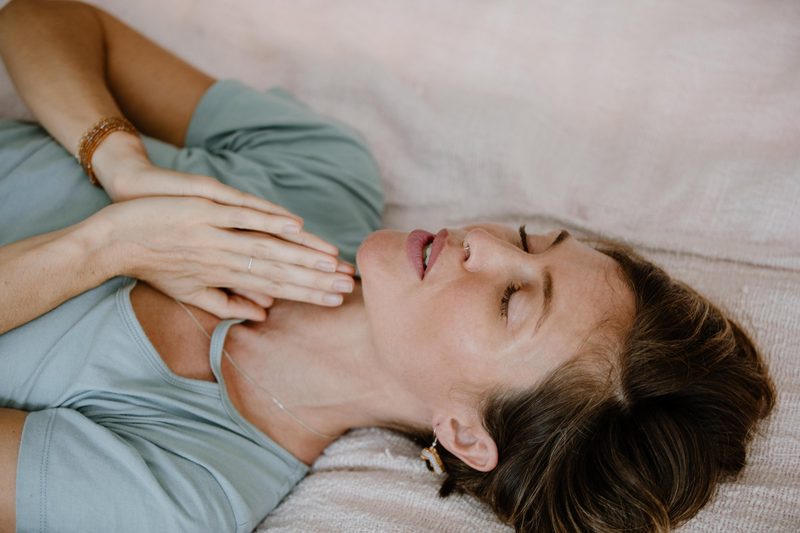
Self-Diaphragmatic Massage Protocol
Why Self-Massage?
Releases chronic holding patterns · Improves diaphragmatic mobility · Can release stored emotion (be prepared) · Improves digestion (organs get better massage) · Reduces anxiety (vagal stimulation) · Supports better sleep · Enhances all breathwork practices.
Time needed: 15–20 minutes. Position: Lying on back, knees bent.
Contraindications: Recent abdominal surgery · Acute abdominal pain · Pregnancy (modify) · Hiatal hernia (gentle only) · Severe anxiety (go slowly).
- 1Phase 1 — Awareness (2 min): Before touching, simply observe. Place hands on upper abdomen, below ribs. Breathe normally and notice what is there. Is there tension? Tenderness? Numbness? Where does your breath reach? No agenda yet — just listening.
- 2Phase 2 — Warming and Contact (2 min): Begin generating warmth. Rub palms together until warm. Place warm hands on upper abdomen. Let the warmth soak in. Set intention: 'I am here to release, not to force.'
- 3Phase 3 — Under-Rib Exploration (5–7 min): Fingertips just under the ribcage on the right side, near the sternum. On exhale, allow fingertips to sink under the ribs — not forcing, just meeting the tissue. On inhale, keep position. On next exhale, perhaps slightly deeper. Work from center to right side, then center to left side. Spend extra time on tender or restricted areas.
- 4Phase 4 — Central Release (3 min): Focus on the solar plexus area — the soft spot between the bottom of the sternum and the navel. This is the central tendon of the diaphragm, deep inside. Work here gently — it can be very tender. Circular motions, gentle pressure, patience. This area often holds anxiety and 'gut feelings'.
- 5Phase 5 — Integration (3 min): Allow everything to settle. Remove hands to sides. Breathe naturally. Notice any shifts. Let the work integrate.
Physical releases: Yawning (very common) · Sighing (releasing held breath) · Gurgling (digestive movement) · Heat or tingling · Spontaneous deeper breathing · Relaxation of distant muscles (jaw, shoulders).
Emotional releases: Tears (grief often lives here) · Anger (suppressed rage) · Fear (held terror) · Relief (finally releasing what was held) · Memories (the body remembers).
If strong emotion arises: Allow it. Keep breathing. You may stop the massage and simply feel. This is healing, not a problem. Journal after if helpful.
Force through pain · Hold breath while working · Rush · Judge what you find.
Demonstrate on yourself or a model. Have them practice in session first. Start gentler than you think necessary. Prepare them for possible emotional release. Advise daily practice for best results.
In sessions: This can be powerful preparation for breathwork. Can release restrictions that limit breathing capacity. Can bring up material to work with in the session. Always check in after — do not leave someone in the middle of a release.
Morning: Brief diaphragm check — is it free or gripped? 1–2 minutes of gentle self-massage if restricted.
Throughout day: Notice when your diaphragm grips. Common triggers: stress, emails, difficult conversations. Brief release when you notice gripping.
Evening: Full self-massage protocol if time allows. At minimum, a few minutes of release before sleep.
Weekly: At least 2–3 full self-massage sessions. Track what emerges and shifts.
Find someone from the training to be your Diaphragm Release Practice Partner. Weekly commitment: each person does at least 3 self-massage sessions per week. Share weekly in your partnership: How many sessions did you do? What did you notice/find/release? Any emotions? Any changes in breathing? Monthly check-in with full group.