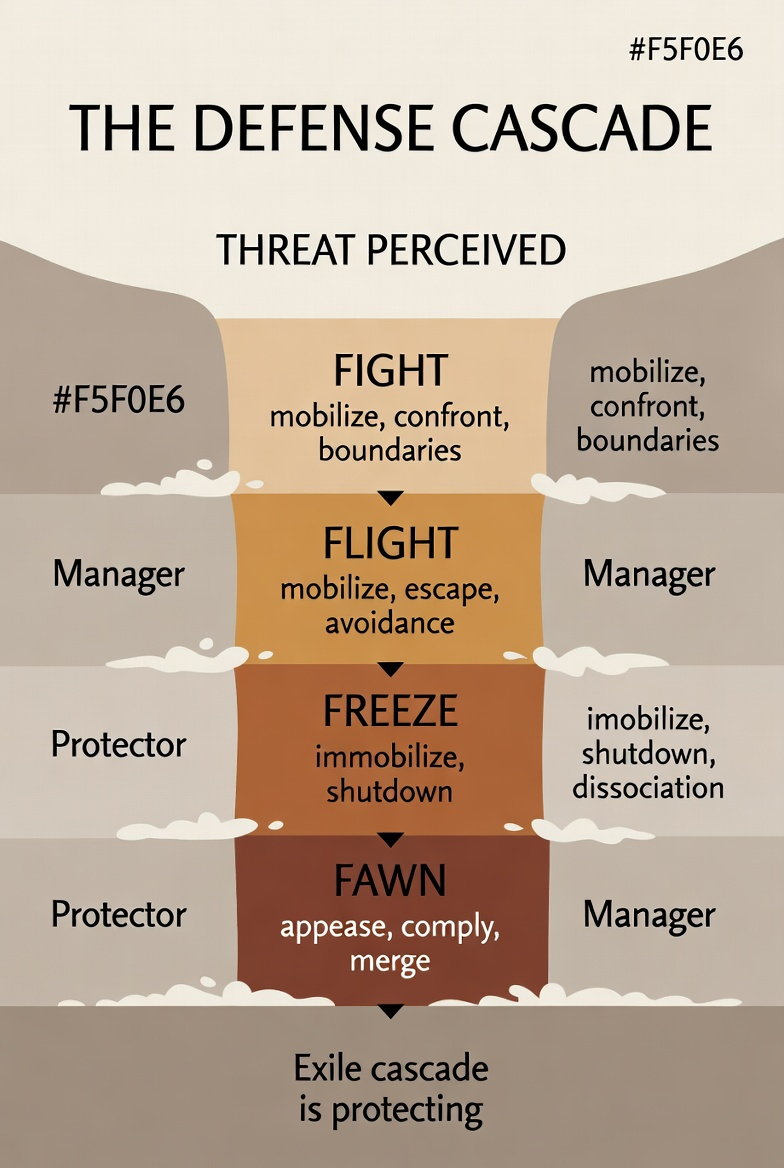
The Defense Cascade
Social Engagement: The First Line
Fight: What Is Actually Happening
Flight: The Blocked Escape
Fawn: Surviving Through Pleasing
Collapse: The Final Protection
Fight and flight are managed by managers. Freeze and fawn are protector responses. The exile cascade is what all defenses are ultimately protecting. Every response has positive intent.
The Four Stages
Fight or Flight. Sympathetic activation. Adrenaline floods the system. Heart rate and breathing accelerate. Muscles prime for action. The body is ready to fight or run. This is healthy survival machinery.
When fighting or running is not possible, the system freezes. The body goes still. Eyes glaze. Breath becomes very shallow. But underneath that stillness the system is still fully activated. Not calm. Suspension.
Particularly common in relational trauma. When the threat comes from someone we need, the system learns to please, appease, comply. To make itself as unthreatening as possible. Over time this can become the default way of moving through the world.
Dorsal vagal shutdown. When nothing has worked and overwhelm is complete, the system collapses. Dissociation. Numbness. Disconnection. Often mistaken for calm. It is not calm. It is the deepest level of protection the nervous system has.
What Completion Actually Looks Like
Pushing through the arms. Striking movements. Sounds of assertion, growls, a firm "no." A sense of power returning to the body. Often followed by tears or laughter. Relief afterward.
Running movements in the legs. Kicking. Pushing away with the feet. The breath suddenly releasing. A physical sense of escape finally finishing. Relief, often followed by tears.
Tremoring and shaking. This is not a problem. This is the nervous system discharging. Temperature changes. Breath returning on its own. Often the underlying fight or flight energy surfaces afterward.
Sensation slowly coming back. Movement returning. A feeling of coming back into the room. Waves of emotion as full contact is restored. Warmth returning to the face and hands. "There you are."
Creating the Conditions for Completion
1. Safety first. The nervous system will not release survival energy without sensing safety. Everything depends on this.
2. Slow and titrated. Manageable doses at the productive edge, not the overwhelming one.
3. Resource throughout. Ground, breathe, connect with the present — not just at edges.
4. Allow whatever emerges. Do not direct the completion. You are making it safe to happen on its own.
5. Integrate after. Meaning-making only after somatic processing. Never before.
Reading the Cascade in Session
The goal is never to force a client to a different stage. The goal is to create the safety and support that allows the nervous system to complete what it started and return to regulation naturally. Trust the body's intelligence.
Rate your own tendencies for each defense response from 1 to 5. Which one do you move to most naturally? Share with the group. You cannot recognise in clients what you have not first recognised in yourself.