Welcome & Initiation
Where your journey as a practitioner really begins
The Cocoon Method — Practitioner Training Manual
Contents
- 01Welcome to The Cocoon Method
- 02Breath as the Master Key
- 03Why You Are Really Here
- 04Your Wounds as Your Qualification
- 05What We Actually Do
- 06The Cocoon Philosophy
- 07The Nine Ways of Seeing
- 08The Self-Healing Mechanism
- 09Your Nervous System: A First Look
- 10The Relationship Is the Medicine
- 11The Practitioner's Pledge
- 12The Journey Ahead
Welcome to The Cocoon Method
Hi. My name is Nina. And I want to welcome you here really from my heart to this training.
People come to this work for many different reasons. Some come because they love learning, because something in them is deeply curious about the human being and how we actually work. Some come because they already hold space for others and want to do it with more depth and more wholeness. Some come because they have been collecting pieces for years and are looking for something that brings it all together. And yes, some come because something in them is ready to look more honestly at themselves.
All of these reasons are valid. All of them are welcome here.
“When we help people come back to themselves — really back to themselves — something shifts. Not just in that person, but around them.”
Over seventeen years I have been weaving together everything I could find that actually works with the whole human being. Breathwork, bodywork, energy work, IFS, astrology, fascia release, movement, sound, nervous system regulation. What I have come to understand is that the real depth comes when you can see a person through all of these lenses at once.
This training lives in your body, not just in your understanding. Every practice, every exercise, every partner session asks you to feel something first — not just know it. And the places where something gets activated in you as you learn are not distractions from the work. They are the work.
Come to this fully. Not rushing through it, but arriving in each Part and letting it land before moving to the next. Welcome. I am glad you are here.
What the Cocoon actually is
The Cocoon Method is named for the miraculous process by which a caterpillar becomes a butterfly. Inside the cocoon, something remarkable happens: the caterpillar does not simply grow wings. It completely dissolves. Its entire structure breaks down into a kind of primordial soup. And from that apparent destruction, from that total surrender of the old form, something entirely new emerges.
But here is what most people do not understand about the cocoon: the process cannot be rushed. If you cut open a cocoon to help the butterfly emerge, it dies. The struggle to emerge is not an obstacle to be avoided — it is the very process that pumps fluid into the wings, making flight possible. Without the struggle, there is no strength.
The darkness serves. The struggle strengthens. The apparent dissolution is actually reorganisation at a higher level of complexity. As a Cocoon Method practitioner, you will learn to trust the darkness, to resist the urge to rescue people from their necessary struggles, to believe in the butterfly even when all you can see is the goo.
But first, you must know this territory in your own body. You must have been the goo.
This training will ask much of you. It will ask you to face what you have been avoiding, to feel what you have been numbing, to tell the truth about who you are and who you are becoming. In return, it will give you something beyond technique: it will give you yourself. And from that ground of authentic selfhood, you will be able to offer others something no certification can provide — the embodied presence of someone who has walked the path and emerged transformed.
What is the real reason you said yes to this training? Not what sounds good — what is actually true.
What do you hope this training will change in you? Be as specific as you can.

Breath as the Master Key
I want to start with something easy to overlook because we do it 20,000 times a day without thinking about it. Breath. Not as a technique. Not as a tool. Breath as the thing it has always been in every culture and tradition that has ever tried to understand the human being.
What every language already knew
Consider how languages across the world reveal the sacred nature of breath. In Sanskrit, prana means both breath and life force — the same word because the ancient yogis understood they were the same thing. In Hebrew, ruach means breath, wind, and the spirit of God. In Greek, pneuma means breath, spirit, and soul. In Latin, spiritus — which gives us the word spirit — also means breath. In Chinese, qi means breath, air, and vital energy.
These are not coincidences of language. They are recognitions, encoded across cultures and millennia, of a fundamental truth: breath is the interface between the material and the immaterial. Between body and what animates it.
What makes breath unique
Of all the body's automatic processes — heartbeat, digestion, hormone regulation — breath alone is under voluntary control. Your heart beats without you asking it to. But your breath does both: it runs on its own, and the moment you bring awareness to it, you can change it. When you change it, everything changes with it.
This is why breath is the master key in this training. Not because it is the most dramatic tool. Because it is the most precise. It speaks directly to the nervous system in a language that bypasses thought entirely. It does not need the thinking brain's permission.
“The conscious engagement of breath is an ancient art form which holds some of the most powerful mysteries known to humanity. Conscious breath literally thins the perceptual veil, allowing us to merge with our higher spiritual nature.”
Breath is the carrier wave of life itself — the bridge between spirit and matter, the conscious and the unconscious. When you breathe consciously, you are not merely exchanging gases. You are participating in an ancient communion between your individual self and the infinite field of life force that permeates all existence.
This is the chain that makes breath the master key: when you change the breath, you change the state of the nervous system directly. When you change the nervous system, you change what is possible in the psyche. When you change what is possible in the psyche, you change the life. Three steps. One instrument.
How did breath show up in your childhood home? Was it discussed, modelled, restricted, or ignored?
When do you notice yourself holding your breath? What situations or feelings trigger this?
- Put down whatever you are holding. Feel both feet flat on the floor.
- Place one hand on your chest, one on your belly. Just rest them there.
- Take a breath — not a special breath. Just notice: does it move your chest or your belly?
- Take three more. On the fourth exhale, let it be longer than the inhale. Notice what happens.
- Sit for thirty seconds with what you notice before reading on.
What did you notice? Where did the breath go? What changed?
Why You Are Really Here
Something brought you here. Not by accident. Not by casual interest. Something deeper — something that has been stirring, perhaps for years, perhaps longer. There was a moment, or a series of moments, when you knew with a certainty that transcended logic: you are meant to help people heal.
For some that knowing arrived like lightning — a single session that cracked open years of armoring, a moment in someone else's process where your soul whispered: *this is what I came here to do.* For others it was quieter, more gradual. A lifetime of being the one people confided in. A gift for sitting with pain without flinching. For others still, it arrived through their own brokenness — and somewhere in that darkness, something opened.
A note on parts from the very beginning
Before we go further, I want to introduce a framework that will run through this entire training. In IFS — Internal Family Systems — we understand that every person is made up of multiple parts. The part of you that signed up with excitement. The part that is slightly worried about whether you are ready. The part that has been searching for this for years. The part that wonders if it is enough.
All of them are here. And all of them are welcome. This training does not ask you to become someone different. It asks you to hold all of what you find in yourself with a little more understanding. Every part of you, even the ones that exhaust you, has been trying to help you.
The wounded healer
Jung named the wounded healer archetype. The healer whose own wounds give them access to the depths where their clients need to go. The depression that brought you to your knees. The anxiety that made the world unbearable. The loss that cracked something open. These experiences are not obstacles to this work. They are your qualification.
But the archetype has a shadow side. Vicarious healing — using the client's process to resolve your own material, so the session becomes about you while appearing to be about them. Rescuing — an inability to tolerate the client's distress, leading to premature intervention that interrupts the natural process. Repetition — unconsciously selecting clients who recreate your original wound scenario.
None of these are moral failures. They are predictable responses to wounds not yet fully processed. The solution is not to have no wounds — it is to keep working on your own material so that your history becomes wisdom rather than compulsion.
The wound types and what they give you
You understand the weight of existence when meaning has drained away. You know what it is to function while feeling hollowed out. You can sit with a depressed client in a way that no textbook can teach because you have been there.
You understand the prison of a nervous system stuck in alarm. You know the exhaustion of a mind that will not stop. You have learned strategies for regulation not because you read about them but because you needed them.
You understand fragmentation — what it is to have parts of yourself locked away, inaccessible, frozen in a moment that has long since passed. You know that healing is not linear.
You understand the desperate search for relief from unbearable inner states. You have felt the pull toward anything that offers escape. This gives you profound compassion for clients still in that search.
You understand the shattering of the defended heart. You know what it is to love and lose, and to have to rebuild a relationship with yourself after that loss.
The shadow in more detail
The shadow of the wounded healer shows up in four specific ways. Worth knowing precisely.
It is easier to focus on others than to face yourself. Every client becomes an opportunity to do vicariously what you will not do directly. You can stay very busy and never have to look inward.
There is a particular emptiness that can only be filled by being the one someone else depends on. If clients need you, you matter. But this need keeps clients dependent rather than moving them toward their own wholeness.
To be seen as wise, as above the messy humanity of others. This is a particularly seductive trap in the healing world, where being the person who holds space can carry real social reward.
If you are the one guiding the process, you never have to be the one at the mercy of it. This can make you a technically skilled practitioner who unconsciously prevents clients from going to the places that would ask the same of you.
None of these are permanent disqualifications. They are simply the shadow side of the same gifts. The practitioner who knows their shadow can work with it consciously. The one who does not will act it out with clients.
The archetype and its history
The wounded healer archetype stretches back through history. The Greek myth of Chiron tells of a centaur who was accidentally wounded by a poisoned arrow and could not heal himself — yet became the greatest healer of his age precisely because he lived with the wound. Carl Jung developed this concept psychologically, recognising that it is often the analyst's own wounds that give them access to the depths where their clients need to go.
This is not to glorify suffering or suggest that more wounds make better healers. It is simply to recognise what is already true: your path here was not random.
The commitment is ongoing
Being a wounded healer is not a past-tense achievement. You do not arrive at a point where you are fully healed and ready to help others. The work is ongoing. Which means the commitment is ongoing.
This means staying humble — recognising that you do not have all the answers, remaining curious about your own blind spots. It means having support. No healer should work in isolation. You need peers who understand this work, supervisors who can see what you cannot see, your own space to be the one receiving rather than always giving.
Describe the moment, or moments, when you knew you were called to this work. What happened?
Which of the shadow patterns — rescuing, vicarious healing, repetition — do you recognise in yourself, even a little?
Your Wounds as Your Qualification
Understanding how your specific wounds have prepared you for this work is not optional. It is essential to practising with integrity. Let us look at the three main wound categories and what each one gives you.
Attachment wounds
If your early caregiving environment was inconsistent, unavailable, or intrusive, you carry attachment wounds. Anxious attachment gives you acute sensitivity to others' emotional states, a capacity to read subtle shifts in mood, a deep understanding of the terror of disconnection. What this qualifies you for: working with clients who fear abandonment, helping people build secure attachment through the therapeutic relationship.
Avoidant attachment gives you deep respect for autonomy, understanding of the protective function of walls, appreciation for the courage it takes to let someone in. What this qualifies you for: working with clients who struggle to receive, understanding the necessity of going slowly. Disorganised attachment — where the person you depended on was also a source of danger — gives you profound understanding of internal conflict and how trauma fragments the self.
Developmental wounds
At each stage of development we face specific challenges. When development is disrupted, specific wounds form. The first year — trust versus mistrust — gives you understanding of the foundational importance of safety. The toddler years give you understanding of the balance between support and autonomy. Early childhood gives you understanding of shame around impulse and creativity. School age gives you understanding of competence and belonging.
Whatever stage was most disrupted for you — that is the territory you understand from the inside. That understanding is irreplaceable.
Trauma wounds
Trauma wounds are the direct imprints of overwhelming experience. What they give you: an understanding of the body's intelligence in the face of what cannot be processed, deep respect for the nervous system's responses, and the ability to stay with someone in their terror without flinching — because you have known it yourself.
Your wounds do not disqualify you. They are part of why you can go where you need to go with clients. The practitioner who has never touched their own pain cannot hold someone else's. But they require ongoing attention — not because you need to be fixed before you can work, but because the work keeps asking more of you. The deeper you go with clients, the more territory you need to have explored in yourself.
Two more wound territories
If you have lived with chronic illness, pain, or disability, you carry somatic wounds. These teach you what it is to be trapped in a struggling body, about the limits of mind-over-matter approaches, about the grief of physical limitation. They qualify you to work with clients whose healing is complicated by medical realities.
Grief teaches like nothing else. If you have lost deeply — through death, divorce, estrangement, or the ending of a dream — you understand the territory of sorrow. You know that grief is not a problem to be solved but a landscape to be lived through. You qualify to walk with others in their loss.
Every wound category above points to specific clients you can reach that others cannot. The practitioner who has known depression can sit with a depressed client in a way that no amount of training alone can replicate. Your history is not your limitation. It is your range.
Developmental wounds by stage
At each developmental stage we face a specific challenge. When development is disrupted, a specific wound forms — and a specific gift emerges from that wound.
If basic needs were not reliably met, you carry wounds around safety and trust. This gives you deep understanding of why safety must come first in any therapeutic encounter.
If your emerging independence was crushed or shamed, you carry wounds around self-determination. This gives you understanding of the delicate balance between support and control.
If your impulses to explore and create were punished or dismissed, you carry wounds around self-expression. This gives you sensitivity to the ways clients have been taught to suppress their natural aliveness.
If your efforts were never good enough, you carry wounds around competence and belonging. This gives you understanding of the internal critic and perfectionism.
The four types of trauma wound
Not all trauma is the same. Understanding the type shapes how you work with it.
A single overwhelming event — accident, assault, sudden loss. Clear before-and-after. Often has fragmented, sensory-based memory rather than narrative recall.
Chronic adverse conditions during formative years — ongoing neglect, abuse, instability. Shapes the nervous system's baseline rather than creating a single imprint.
Wounds caused by those who were supposed to protect you. Particularly complex because the nervous system learned to manage threat within attachment — the very relationship that should have been safe.
Wounds from historical or ongoing oppression, from being part of a targeted group, from cultural loss. Carried in the body across generations as well as within individual experience.
Which wound category resonates most with your own history? What did that experience teach you about other people?
Name one shadow pattern you can see in yourself — even a small version of it. What situation tends to trigger it?
- Draw a simple outline of a body on paper. Or just close your eyes and feel your body from the inside.
- Notice where in your body you carry your significant wounds. Not to analyse — just to feel where they live.
- For each place, notice: what did this experience teach you? What capacity did it build?
- Sit with the recognition that your wounds and your gifts are the same territory, seen from different angles.
What did you notice? Where do your wounds live in your body?
What We Actually Do
We help people get back to themselves. To the part of them that was there before all the holding back started. Before the years of learning to be smaller, quieter, more controlled. Before the body started armoring against feeling too much.
How the body stores what we have not been able to feel
The body is not a container for the mind. It is an intelligent storage system. When an experience is overwhelming — when it exceeds our capacity to process in the moment — the body does something remarkable. It stores the unprocessed material for later. This is brilliant adaptation. The problem arrives when later never comes.
Three things the body stores
When the body mobilised for fight or flight and could not complete the action, the energy froze in the tissues, waiting for the completion that never came. You can sometimes see this in a client as the impulse that lives in a shoulder, a fist, a pair of legs that want to move but cannot find permission.
The scream that had to be swallowed, the tears that were not permitted, the rage that was too dangerous. Every unexpressed impulse lives in the body as held potential energy.
"I am not safe" becomes chronic muscle guarding. "I must not take up space" becomes restricted breath that never reaches the belly. The body literalises what the psyche believes.
What true release actually is
True release is not catharsis. Not just the expression of what has been stored. It has three parts — and if any one is missing, what you have is discharge, not transformation.
The stored energy actually moves. Trembling, shaking, tears, temperature changes, deep sighs. Signs of genuine discharge: involuntary tremoring, tears without a story attached, temperature shifts, gurgling or digestive sounds. The body knows exactly how to do this. Your job is to create the conditions where it can.
If the original experience involved an incomplete action, the body may need to finish it. Pushing movements, reaching, protective gestures that finally get to do what they were designed for. When completion happens there is a specific quality of recognition — something settling, something held finally allowed to arrive.
What cathartic approaches most often miss. The discharge must be made sense of, woven into the person's ongoing experience of themselves. Without this, even genuine release can feel destabilising. Integration is the landing. The change that persists beyond the session.
What release is not
Release is not performance. Some clients have learned to perform catharsis — crying on cue, shaking because they sense they should. Genuine discharge has an involuntary quality. Something is happening to the person, not something they are producing.
Release is not retraumatisation. If someone accesses overwhelming material without adequate resources, they are not healing — they are reliving overwhelm. The most common mistake practitioners make is pushing for more expression rather than slowing down and ensuring the person is actually present with what is arising.
“The most profound releases are often the quietest. A deep breath. A slight tremor. A single tear that arrives with tremendous weight. Do not be seduced by intensity. Integration is the measure.”
A client comes to you having done years of intense breathwork elsewhere. They know how to activate, they can produce dramatic releases, and they are proud of it. But between sessions nothing changes. Relationships stay the same. The anxiety returns within days. What is happening? The discharge is real but integration never arrives. The client has learned to use catharsis as a pressure valve rather than a doorway to change. Your clinical task: slow the session down dramatically. Less activation, more integration time. More attention to what happens after the peak, not during it. The client may initially feel disappointed. Part of your role is educating them that a quiet session that ends in genuine groundedness has served them more than a dramatic one that leaves them raw.
Body memory did not form instantly and does not release instantly. The cultural desire for quick fixes runs counter to how the body actually heals. Rushing overwhelms. Going slowly allows integration. The practitioner who can tolerate the pace of the body — who does not push for faster results, who trusts the process — creates the conditions for genuine healing. Speed is not a virtue in this work.
Two more things the body stores
Pain too intense to fully feel, pleasure too frightening to allow. Any sensation that exceeded the capacity to be present with it gets stored rather than processed.
Grief that was not allowed to complete, fear that became chronic anxiety, shame that settled into posture. Every emotion we could not fully feel remains in the body as potential energy waiting for the conditions to move.
How to recognise each stage of release
Involuntary tremoring or shaking. Deep spontaneous breaths or sighs. Tears arriving without a story. Temperature shifts — warmth, sweating, chills. Gurgling or digestive sounds. Yawning. Spontaneous movement impulses. Changes in skin colour. The involuntary quality is the signal. Something is happening to the person, not something they are producing.
Spontaneous defensive movements — impulses to push, reach, kick, or curl up. A sense of something finally finishing. The body settling after movement. A quality of recognition — "that's it" often without words. A deep exhale. Sometimes tears of relief rather than grief.
Ability to articulate what happened. Sense of completion and closure. Changed perspective on the material. The nervous system returning to a new baseline — more regulated, more resilient. Changes that persist in daily life beyond the session.
Where in your body do you feel something as you read this chapter? Just notice without trying to explain it.
What is one thing you have been carrying for a long time that has never been fully expressed? You do not need to go deep — just name it.
The Cocoon Philosophy
The Cocoon Method refuses to choose between science and spirituality. We do not reduce the sacred to mere neurology, nor do we ignore the profound insights that modern research provides. We hold both. The nervous system the neuroscientist studies and the energetic matrix the healer perceives are the same system seen through different instruments. Different maps, same territory.
The Three Gateways
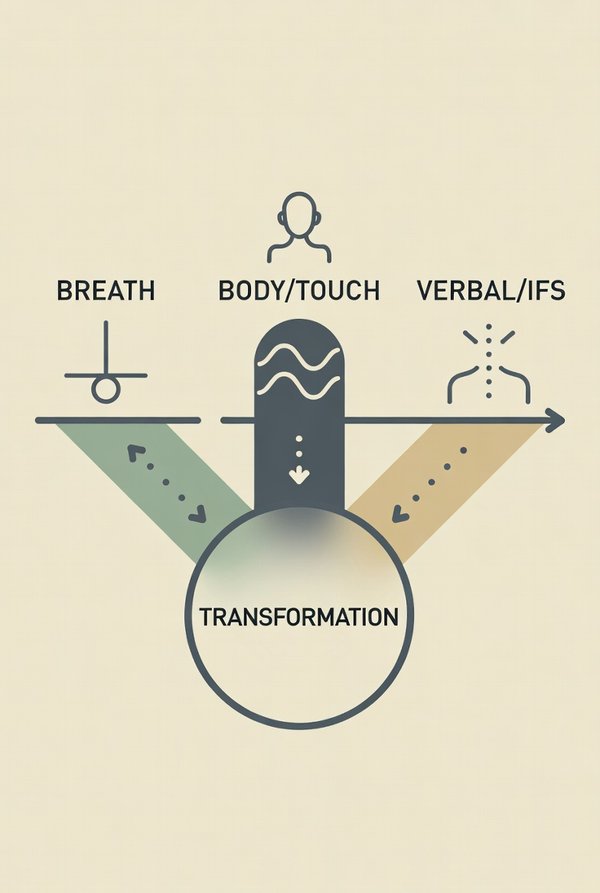
There are three ways in. Three doors that lead to the same room. In every session you are always choosing which one the person in front of you needs right now.
Works directly through the brainstem, bypassing the thinking mind entirely. When you change the breath, you speak straight to where survival responses live through the vagal-respiratory coupling. This is why breath is the fastest regulatory tool we have. An extended exhale releases acetylcholine to the sinoatrial node. Six breaths per minute maximises heart rate variability. The breath gateway is physiology before psychology.
Works through interoceptive and proprioceptive pathways — the peripheral nervous system, the fascial network, the body's own sensory intelligence. Touch says something that words cannot say and that breath alone cannot reach. Contact before concept.
Works through the prefrontal cortex and its connections to the limbic system. Language, when used well, creates the distance from experience that allows it to be witnessed rather than relived. A perfectly timed reflection creates the experience of being truly seen that the nervous system has been waiting for. This is where meaning-making happens.
In a session you are always choosing. Someone above the window of tolerance: breath first, then body, then words. Someone dissociated: gentle body contact first to bring them back, then breath to establish rhythm, then words. Someone regulated and ready to process: all three are available.
The No-Tetany Philosophy
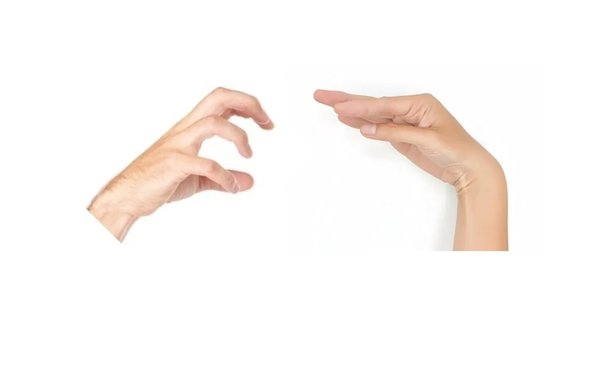
Tetany is the involuntary muscle cramping that happens when CO2 drops from over-breathing. The hands claw. The face contorts. Some breathwork traditions see this as evidence of deep release or spiritual breakthrough.
In Cocoon: tetany means the nervous system has been pushed past its capacity to integrate. The person is not releasing — they are locked. And integration requires regulation, not overwhelm.
The hands beginning to tighten. The face beginning to contract. The breath becoming effortful rather than flowing. The jaw clenching. When you see these signs — slow the breath, add grounding cues, apply touch. This is not timidity. This is precision. The most profound sessions in Cocoon are often the quietest.
Integration over catharsis
The goal is not the most intense experience. The goal is the most integrated one. A small clean fully integrated release is worth infinitely more than a massive cathartic experience the system cannot hold.
Some clients will initially be disappointed by this. Part of your clinical role is educating them: intensity is not the measure. Integration is. And integration happens inside the window of tolerance — not outside it.
A new client, referred by a therapist, has heard that breathwork can be intense. They are visibly guarded in the opening conversation. What do you do? You do not try to reassure them that it won't be intense — that would be both dishonest and unhelpful. Instead you make a genuine offer: we go at the pace your nervous system chooses. You cannot do it wrong. If anything feels like too much, we slow down. That's not failure — that's precision. This reframing often releases the guard more completely than any reassurance would. The client who comes in most defended often ends up being able to go surprisingly deep precisely because they were given complete control over the pace.
Knowing which door to open
The person is stuck in their head and cannot access the body. Cognitive approaches have plateaued. Activation and energy-building are needed. You want to bypass intellectual defences.
There is obvious body armoring or chronic tension. The person cannot feel their body or is disconnected from sensation. A suppressed impulse needs physical completion. Words and breath alone are not reaching the stored material.
The person needs cognitive understanding to feel safe enough to proceed. A specific part or protector needs to be heard before it will let go. Material has surfaced that needs meaning-making before it can integrate. The person is overwhelmed and needs language to create containment.
The three gateways are not techniques to apply rigidly. They are doorways to be discovered in each moment. Most sessions will move through all three. The skill is in the sequencing — reading what the nervous system needs next.
“Between stimulus and response there is a space. In that space is our power to choose our response. In our response lies our growth and our freedom. — Viktor Frankl”
What it looks like when all lenses converge
When a client lies on a mat, breathing deeply, and their body begins to tremble, we can describe what is happening through multiple lenses simultaneously. The neuroscientist sees the activation of the autonomic nervous system. The psychologist sees the emergence of unconscious material. The energy healer sees the movement of blocked chi. The spiritual teacher sees the dissolution of ego. All of these descriptions are true. None is complete. The Cocoon Method weaves them together.
This is not wishy-washy eclecticism. It is integral understanding. The nervous system the neuroscientist studies and the energetic matrix the healer perceives are the same system seen through different instruments. Different maps, same territory.
Why catharsis alone is not enough
Catharsis can become retraumatising. If someone accesses overwhelming material without adequate resources, they are not healing — they are reliving overwhelm. The session leaves them raw, destabilised, and less regulated than when they arrived.
Catharsis can become addictive. Some people become attached to the intensity of cathartic experiences and keep returning for more without ever integrating. The emotional release becomes a substitute for change rather than a doorway to it.
Catharsis without integration changes nothing. You can have the same cathartic release session after session and find that nothing shifts in daily life. The discharge happens inside the session and evaporates.
How we prioritise integration in practice
We assess capacity and build resources. We do not take people into deep water until they can swim.
We monitor activation levels. We intervene when overwhelm approaches. We ensure the breath stays within range.
We dedicate significant time to grounding, stabilising, and meaning-making. Sessions do not end at the peak. They end when the person is fully back, fully present, and able to drive home.
We assign integration practices. We check in about how material is settling. A session with dramatic catharsis that leaves someone dysregulated for days has not served them. A quiet session that ends in genuine groundedness has.
The No-Tetany Philosophy says a small, fully integrated release is worth more than a massive cathartic one. Does this match or challenge how you have thought about healing until now?
Which of the three gateways do you naturally rely on most? Which feels least natural to you?
- Breath only — three minutes of slow connected breath. Notice what shifts without any touch or words.
- Touch only — place both hands on your own belly or shoulders. No breath guidance, just contact. Two minutes.
- Words only — speak one sentence out loud about what you are feeling right now. Then be silent for one minute.
- Notice: which gateway opened something first? Which felt most accessible? Which felt most foreign?
What did you notice? Which gateway felt most natural to you right now?
The Nine Ways of Seeing
One of the things that makes Cocoon genuinely different is this: we do not look through one lens. Because a human being cannot be understood through one lens. In Cocoon, every client is held through nine different expert perspectives simultaneously. Not nine separate things — nine angles on one truth.
You do not cycle through all nine consciously in every session. What you develop over time is peripheral vision — multiple lenses running in the background like instruments in an orchestra. Most of the time one plays the melody. But the others are always present, ready to come forward.
What is the nervous system doing? What is the arousal level? What physiological intervention serves this moment?
What adapted strategy is this person using to stay safe? What part is running this session? What does the inner system need?
The liver holds anger. The kidneys hold fear. The lungs hold grief. Where is the chi not flowing? Which organ carries what has been held too long?
What is this person's nature? How do I work with it rather than against it? What will help and what will overwhelm?
What is happening in the physical body? Is this nervous system properly resourced to do this work right now?
Where is the energy held? What is the quality of the field? Where are the chakras congested or absent?
What is the soul learning through this? What is being invited? What is the deeper meaning? What serves evolution?
Breath is the primary clinical instrument. Every session begins by reading the breath — its pattern, rate, location, restriction. Mastery means following the breath moment to moment and adjusting the entire session in response.
The body as a living expression of the chart — not deterministic, but as a map of tendencies. Saturn may show up as chronic contraction. The Moon as unmet relational needs held in the belly and chest. The chart is not the truth — it is a starting place for inquiry that the breath and body then reveal or refute.
What each perspective brings and asks
Each perspective has specific gifts and a specific clinical question. Here is the quick reference.
Research-based validation, language for sceptical clients, mechanisms. Clinical question: What is happening in the nervous system right now? What physiological intervention serves this moment?
Attachment understanding, parts work, defence mapping. Clinical question: What adapted strategy is this person using to stay safe? What part is running the session?
Five Element theory, organ-emotion links, qi flow. Clinical question: Which element is out of balance? Which organ is carrying what has been held too long?
Constitutional understanding, dosha assessment. Clinical question: What is this person's nature? What will help and what will overwhelm?
Gut-brain axis, nutritional foundations, whole body. Clinical question: Is this nervous system properly resourced for this work?
Chakra assessment, aura reading, subtle field. Clinical question: Where is the energy held? What is the quality of the field today?
Soul journey, meaning-making, karmic context. Clinical question: What is the soul learning? What is being invited?
Some need scientific validation. Others need spiritual context. Most need both at different moments. Avoid dogmatism — when you can see through many perspectives, you are less likely to become rigidly attached to any one map. Choose the language that opens the door for *this* person, not the language you find most comfortable.
What each layer includes
Neuroscience research, physiological mechanisms, outcome studies, evidence-based protocols, measurable markers like HRV and BOLT score.
Yogic traditions and pranayama, Taoist practices, indigenous wisdom, mystical traditions, perennial philosophy.
Breathing techniques, touch protocols, verbal guidance scripts, session structures, assessment tools. Theory without practice is academic.
Personal practice development, embodiment of principles, quality of presence, your own continued healing. The being behind the doing.
The Cocoon Method develops all four layers together — creating practitioners who are credible and connected, competent and present.
Which of the nine perspectives feels most natural to you right now? Which feels most unfamiliar or undeveloped?
Think of someone you have worked with or supported. Which lens would have given you the most useful information about them that you did not have at the time?
The Self-Healing Mechanism
How this training is built
Every topic in the Cocoon Method is explored through four layers of learning, each building on the one before it. Knowing this helps you understand why the training feels the way it does.
The research, the mechanisms, the evidence. This gives you language that builds credibility and explains why things work.
What the ancient practitioners understood. The traditions that science has not yet caught up to. This gives you depth and connection to something larger.
The specific techniques, protocols, and interventions. Theory without practice is academic. This is where everything becomes applicable.
Who you are being as you do the work. Not knowing more but being more. Clients feel whether you are performing techniques or genuinely offering yourself. This is what separates technicians from healers.
A practitioner strong in science but weak in wisdom will be credible but potentially soulless. Strong in practice but weak in mastery will be technically competent but lack the presence that creates deep transformation. The Cocoon Method develops all four.
One of the most important insights of somatic therapy is this: the body has its own healing intelligence. It knows what it needs to do. It knows how to discharge, how to complete, how to integrate. The problem is not that the body cannot heal — it is that we keep interrupting its natural process.
We interrupt with fear — pulling back from sensations that feel unfamiliar. We interrupt with control — trying to make healing happen rather than allowing it. We interrupt with interpretation — turning bodily experience into mental stories that take us out of the body. We interrupt with fixing — trying to solve the problem rather than be with the process.
Your role as facilitator
Given that the body has its own healing intelligence, what is your role? Not to heal the person. To create the conditions in which the body's own wisdom can operate.
Establish safety, build resources, provide the container.
Pay close attention, serving as an external regulator and witness to the process.
Offer breath, touch, or verbal guidance as needed to support what is already moving.
Monitor activation levels and intervene before the system is flooded.
Perhaps most importantly, recognise when to do nothing. When the body is doing its work, your job is simply to be present.
The practitioner's own practice
Here is the truth that cannot be avoided: you cannot facilitate what you have not experienced. You cannot hold space for depths you have not visited. You cannot guide through territories you have not explored.
This is why the first requirement of the Cocoon Method is your own practice. Not as a nice idea — as a professional requirement.
Not as technique but as relationship. Getting to know your own breath, your own body, your own patterns.
Receiving this work, not just giving it. Having your own material moved, released, integrated.
Journalling, meditation, therapy — whatever helps you stay current with your own inner life.
Yoga, movement, somatics — keeping you in relationship with your physical form.
Working with mentors and peers who can see what you cannot see.
What does your current body or breathwork practice actually look like? Not what you intend — what you actually do.
Where do you most tend to "interrupt" the natural healing process in yourself — with fear, control, interpretation, or fixing?
- Daily breath observation — 5 minutes. Lie down, hands on belly. Just notice. Do not change anything.
- Body check-in — before each meal, pause and scan. Where are you holding tension? Where do you feel open?
- Journalling — one page, morning or evening. What is present? What are you avoiding feeling?
Which one are you committing to? When and where will you do it?
Your Nervous System: A First Look
Before we close Part 1, I want to introduce the foundation that everything else in this training rests on. Part 3 goes deep into nervous system science. But you need a basic map now, because without it, nothing else makes complete sense.
The two main branches
Your autonomic nervous system operates below conscious awareness, regulating heartbeat, digestion, breath rate, and countless other functions. It has two main branches. The sympathetic branch is your gas pedal — it floods the body with adrenaline, increases heart rate, and prepares you to fight or flee. The parasympathetic branch is your brake pedal — it slows heart rate, activates digestion, and allows healing and regeneration.
Most of the people who come to you are stuck somewhere between chronic activation and chronic collapse. Very few have found their way back to regulation and know how to stay there. That is what we are teaching them — and what we must embody ourselves first.
Polyvagal theory and the three states
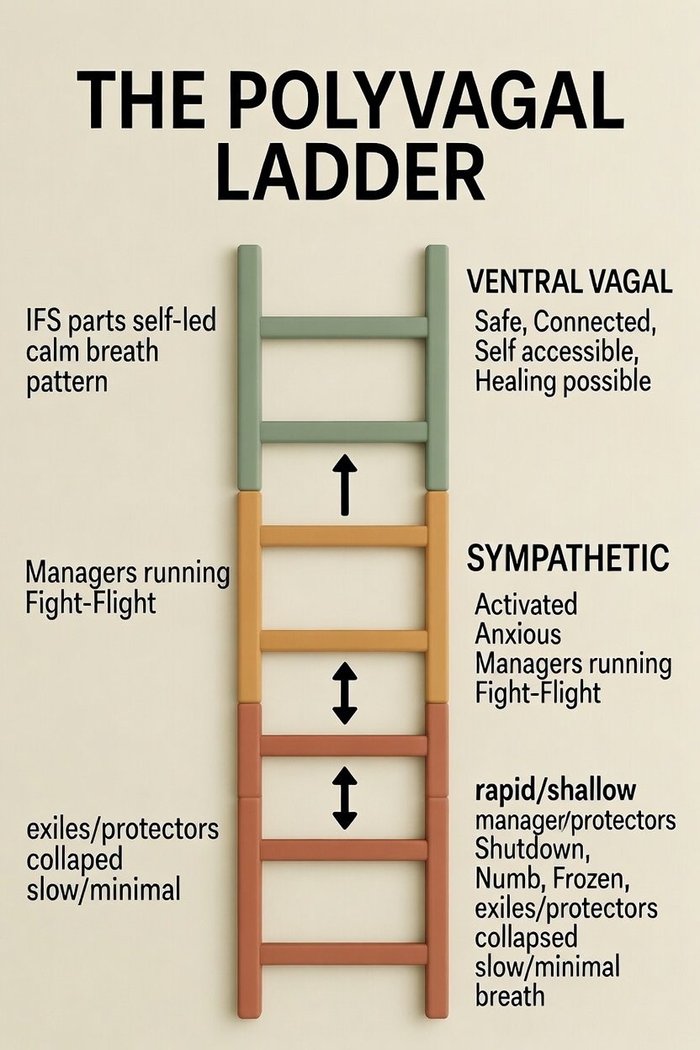
Stephen Porges' Polyvagal Theory, developed in the 1990s, revealed something important: the parasympathetic branch has two distinct pathways. Ventral vagal is the state of safety and connection — calm, alert, able to connect and think clearly. This is the state from which healing happens. This is where we want clients to be able to access. This is where we as practitioners need to operate.
Sympathetic is the mobilisation state — activated, anxious, fight or flight running. Breath is rapid and shallow, muscles are tense, thinking is narrowed. Dorsal vagal is the shutdown state — dissociated, flat, numbed out. The system has determined that escape is impossible and has withdrawn inward.
Your state affects your clients more than any technique. Your regulation — or dysregulation — shapes what is possible in a session. Before you can help others regulate, you must develop your own capacity. Your nervous system is the primary instrument of your practice.
Neuroception — your body's security system
Your nervous system constantly scans for danger below the level of conscious awareness. Stephen Porges calls this neuroception. Before you consciously perceive a threat, your body has already begun responding.
This is why someone can feel unsafe even when they cognitively know they are safe. Their neuroception is detecting subtle cues of danger that their conscious mind has not registered. The breath shifts, muscles tighten, the face becomes guarded — all before any conscious thought of threat.
Warm, friendly face. Calm, melodious voice. Relaxed body language. Predictable movements. Prosodic speech — the natural rise and fall that signals social engagement. Your ventral vagal state is the most powerful safety cue you can offer. It is not what you say. It is what your system broadcasts.
Flat or harsh facial expressions. Sharp or monotone voice. Tense body language. Unpredictable movements. Rushed or erratic energy. Your clients' nervous systems will read these cues below conscious awareness and respond accordingly — regardless of what your words are saying. This is why regulation is the first clinical skill, not the last.
The direct link between breath and nervous system state
This is why breath is so powerful clinically — it is the most direct voluntary access point to the autonomic nervous system.
Activates the parasympathetic branch. This is why a long exhale is the fastest regulation tool available.
Activates the sympathetic branch and signals mobilisation — useful in activation phases of sessions, but dangerous if uncontrolled.
Can access dorsal vagal states — useful therapeutically in very careful contexts, but a red flag if it arrives involuntarily.
By guiding the breath, you guide the nervous system. By shifting the breath pattern, you shift what emotional material is accessible. This is the mechanism behind everything we do.
What each state looks like
Calm but alert. Face expressive, voice warm and varied. Able to connect, think clearly, feel. This is where healing happens.
Heart racing, shallow rapid breathing. Muscle tension, sweating, scanning. Racing thoughts, difficulty relaxing. Useful in short bursts — exhausting when chronic.
Slow, deep breathing OR barely perceptible breath. Relaxed muscles but in a collapsed, not regulated way. Flat affect, disconnection, numbness. Protective in extreme danger — problematic when chronic.
The goal of our work is not to eliminate sympathetic or dorsal responses — they are necessary survival tools. The goal is to increase flexibility: the ability to move between states and return to ventral vagal when the threat has passed.
Where in the body it lives
Chronic tension often represents held defensive impulses: the punch that could not be thrown, the run that could not be completed, the bracing against impact still held years later.
The connective tissue that wraps every muscle and organ can become restricted and adhered. These restrictions can hold both physical and emotional residue.
Chinese medicine associates specific emotions with specific organs: grief with the lungs, fear with the kidneys, anger with the liver. Whether or not you work within that framework, many clients report emotional release when specific organ areas are addressed.
How we carry ourselves reflects our history. The collapsed chest of defeated hope. The raised shoulders of chronic anxiety. The retracted pelvis of shame. The body becomes a monument to what has been lived.
Sometimes the body stores images that emerge during work: visual memories, dream-like sequences, symbolic pictures. These are body memory expressing itself through the language of image rather than sensation.
What happens when body memory is accessed
When body memory surfaces through breathwork or touch, several things may happen. Emergence — material rises from storage into experience as sensation, emotion, image, or impulse. Completion — the body may need to complete interrupted defensive responses: the push that never happened, the run that was stopped. Discharge — stored energy releases through tremoring, temperature change, tears, sound, or movement. Your job is to create the conditions for this to happen safely, then get out of the way.
Which state do you tend to operate from most of the time — ventral vagal, sympathetic, or dorsal vagal? What does that look like for you specifically?
Think of a difficult session or conversation you have held for someone. What happened in your own nervous system as you were holding theirs?
The Relationship Is the Medicine
The research is unambiguous. The quality of the therapeutic relationship is the strongest predictor of positive outcomes across all modalities. Not the specific technique. Not the framework. The relationship.
This makes neurological sense. The nervous system forms through co-regulation with caregivers. The capacity to regulate emotion is learned in relationship. Because we were wounded in relationship, we heal in relationship. The therapeutic relationship offers something many clients have never experienced: an attuned, boundaried, reliable presence that can hold whatever arises without reacting, withdrawing, or retaliating.
What the relationship needs
Predictability, reliability, the sense that you can handle whatever they bring. Created through consistent presence, reliable limits, not flinching from pain.
Tracking their experience closely, adjusting to what they actually need. The attuned practitioner notices when something shifts before the client does.
The client needs to feel accepted as they are — including the parts they find shameful. Not because everything they do is acceptable, but because they are. No bad parts.
A real person, not a professional mask. Your authenticity gives the client permission to be authentic. The practitioner who performs being calm is less effective than one who actually is.
Rupture and repair
Every therapeutic relationship experiences ruptures — moments when connection breaks, when the client feels misunderstood or not seen, when you make a mistake. This is inevitable. How you handle ruptures matters more than the ruptures themselves.
Rupture followed by genuine repair can be more healing than smooth connection — because it teaches something many clients have never experienced: that relationship can survive difficulty. That mistakes do not mean abandonment. That conflict does not end connection. Repair, not perfection, is the therapeutic act.
Countertransference as clinical data
Countertransference — your emotional response to the client — is always information. The unusual pull toward a client. The frustration with one who does not seem to progress. The urge to rescue someone from their distress. The boredom that arrives with a particular client. None of these are problems. They are all data. The clinical practice is noticing them, acknowledging the part of you that is having the response, and returning to Self-energy.
“The relationship is not the backdrop to the technique. The relationship is the medicine. Every session you facilitate is an offer of a different relational experience — one where someone's full self is welcome.”
A practitioner in supervision describes a client who is making no progress despite months of good sessions. The practitioner is skilled, the sessions are technically clean, but nothing shifts. As we explore, something emerges: the practitioner becomes subtly uncomfortable when the client expresses gratitude or need. They redirect quickly, moving back to the work. What is happening? The practitioner's own attachment wound — avoidant, learned to not need — is running in the countertransference. The client can feel it. They sense that their need creates discomfort, so they pull back from the relational contact that would actually move them. The clinical insight: the practitioner's own capacity to receive is the missing ingredient. No technique can substitute for it.
Why relationship heals
Relationship heals because relationship is where we were wounded. The infant does not develop in isolation — they develop in relationship. The nervous system forms through co-regulation with caregivers. Attachment patterns emerge from relational experience. Trauma often involves relational betrayal, abandonment, or overwhelm.
Because we were wounded in relationship, we heal in relationship. The therapeutic relationship offers something many clients have never experienced: an attuned, boundaried, reliable presence that can hold whatever arises without reacting, withdrawing, or retaliating. In this container, new relational experiences become possible. The nervous system learns that connection can be safe.
What holding space actually means
"Holding space" has become a phrase people use loosely, but it points to something essential and specific. What does it actually mean?
It means being able to contain whatever arises. The client brings grief — you can hold it. The client brings rage — you can hold it. The client brings terror, shame, despair — you can hold all of it without being destroyed, without withdrawing, without needing them to be different.
Holding space requires capacity. You cannot hold more than you have developed capacity for. If a client brings something that exceeds yours, you will unconsciously contract, defend, or redirect. This is not failure — it is information about where your own development needs to continue. Every edge you encounter in a client is an invitation to grow your own capacity.
How to actually create each ingredient
Consistent presence. Reliable limits. Non-reactive responses to difficult material. Not flinching from pain, not withdrawing from intensity. Starting and ending sessions on time. Being the same person every time they arrive.
Deep listening. Close observation of what the body is saying alongside what the words say. Checking rather than assuming. Adjusting pace and intensity to their window of tolerance, not your preference.
Non-judgmental presence. Meeting darkness with warmth rather than concern. Finding the adaptive function in even the most destructive patterns — the part that was trying to help, even when the strategy has cost them dearly.
Appropriate self-disclosure. Genuine emotional responses within appropriate limits. Admitting when you do not know. Not performing calm but actually being regulated.
Keeping every commitment, however small. Consistent session frame. Being the same person session after session regardless of what they bring. For clients with attachment wounds, this reliability is itself the medicine.
Holding space is not passive. You are not simply doing nothing. You are actively maintaining presence, regulation, and openness under whatever pressure the client's material generates. And it requires clear limits — paradoxically, the ability to hold requires boundaries. The container must have walls to be a container.
How repair actually works
Repair requires: recognising that a rupture has occurred — often the client communicates this through withdrawal, flatness, or a subtle shift in engagement rather than direct statement. Taking responsibility for your part without defensiveness. Genuinely hearing their experience of what happened — not explaining your intention. Making an appropriate adjustment. And allowing the relationship to re-establish in its own time.
What repair is not: excessive apology that makes the client responsible for managing your guilt. Explanation of your intention that replaces acknowledgement of their experience. Moving on too quickly before the repair has actually landed.
Transference and countertransference as clinical tools
Transference is not a problem to be eliminated — it is data about the client's relational templates and attachment patterns. How they experience you tells you something important about how they experience everyone. When you notice a client relating to you in a way that seems disproportionate to what has actually happened between you — that disproportionate quality is the transference signal.
The key clinical skill with countertransference is developing the self-awareness to notice it as it arises — the pull toward a client, the frustration, the urge to rescue, the boredom — and the skill to use it as information rather than act from it. Your emotional response to a client is always data about what is happening in the room. Learn to read it rather than react from it.
Think of a time when you felt truly received by someone — not fixed, not advised, just genuinely met. What made that possible?
Where do you most lose yourself in other people's material? Where do you tend to forget to stay regulated?
The Practitioner's Pledge
As you enter this training, you are making a commitment to yourself, to your future clients, to the integrity of this work. Read through each commitment slowly. Notice which ones feel natural and which create resistance. The ones that create resistance often point to your growing edges.
When you are ready, check the box next to each commitment. Not as a formality — as a lived agreement.
- 01I commit to my own healing. I can only take clients as deep as I have gone myself. I will maintain my own practice and stay current with my own material.
- 02I commit to working within my scope. I will recognise the boundaries of my competence and refer out when clients need care beyond what I can provide.
- 03I commit to safety over intensity. I will prioritise my clients' nervous system capacity over dramatic experiences. I will work within the window of tolerance.
- 04I commit to integration over catharsis. I will ensure whatever arises is properly integrated. I will not leave clients raw or destabilised.
- 05I commit to consent and boundaries. I will obtain clear consent before using touch. I will maintain appropriate professional boundaries.
- 06I commit to non-judgment. I will meet whatever arises in my clients with acceptance and compassion. I will not impose my agenda on their process.
- 07I commit to continued learning. I will remain a student, always. I will seek supervision, continue training, and stay humble about what I do not know.
- 08I commit to honest self-reflection. I will examine my motivations, notice my projections, and stay conscious of how my own material affects my work.
- 09I commit to honouring the lineage. I will represent the method with integrity. I will not distort the teachings for personal gain.
- 10I commit to service. This work is not about me. It is about reducing suffering and supporting transformation. I dedicate my practice to the benefit of all beings.
A client discloses in their third session that they are currently having suicidal thoughts — not active ideation, they say, but a persistent background feeling that life is not worth living. What do you do? First: acknowledge what they have shared without minimising or rushing. Thank them for trusting you with this. Then: ask directly whether they are safe right now, and whether they have a therapist. If they do not, this is the moment where you are clear: what they are describing is beyond what breathwork alone can hold, and you want them to have the right level of support alongside your work. You make a warm referral — not a clinical dismissal. You continue to work with them, ideally alongside a therapist. This is scope of practice lived, not theorised.
The ethical foundations
Ethics in healing work is not about following rules to avoid punishment. It is about creating the conditions in which healing can actually happen. Ethical violations destroy the container that makes transformation possible.
In every therapeutic relationship, the practitioner holds more power — of authority, expertise, and setting. The client is in a position of vulnerability and openness. This differential is not bad. It is what makes the work possible. But it must be held consciously. The client may comply with things that do not serve them simply because you suggested it. Your words carry disproportionate weight. Use that carefully.
Clients have the right to understand what they are agreeing to before they agree to it. Explain what sessions involve, describe potential risks alongside benefits, confirm they can stop at any time, obtain explicit consent before using touch, and check in throughout rather than assuming ongoing consent. Consent is not a signature — it is an ongoing conversation.
What happens in session stays there, with specific exceptions: danger to self or others, child abuse, legal requirements. Confidentiality creates the safety that allows real disclosure. Do not discuss clients with friends or family, be careful in public spaces, disguise details when using cases for supervision, and maintain secure records.
A dual relationship means you have another relationship with a client beyond practitioner-client — friend, business partner, romantic interest, family member. These are problematic because they confuse the therapeutic frame, complicate transference, and make it harder for the client to be fully honest. Avoid them where possible. When overlap is unavoidable in small communities, name it openly and discuss how you will manage it.
The Journey Ahead
You have completed Part 1. Before you move on, here is the map of where you are going. Each Part builds on the one before it — the understanding you build in Part 3 makes Part 8 possible. The sequence is intentional.
You are here. The calling, the wounds, the philosophy, the relationship.
Where this work comes from. Ancient traditions, modern breathwork evolution, what Cocoon synthesises.
Polyvagal theory in depth, the vagus nerve, window of tolerance, HRV, cellular memory.
The complete respiratory system, the three diaphragms, dysfunctional patterns, the BOLT score.
How trauma stores and how healing happens. The triune brain, implicit memory, the defence cascade.
Multiple lenses of assessment. Reading the body, IFS lens, energetic lens, astrological lens.
A holistic approach to understanding the human emotional system.
Parts work through the body. Managers, firefighters, exiles. The 6Fs protocol. Unburdening.
Knowing when to use what. The intake, contraindications, the decision tree, session planning.
Chakras, nadis, koshas, TCM five elements, Ayurvedic doshas. Reiki and Pranic healing in sessions.
The seven phases of a Cocoon session. Touch protocols, verbal guidance, working with what arises.
The practitioner's inner game. The Master State, the 8 Cs, energetic hygiene, preventing burnout.
Co-regulation is the most fundamental somatic reality of this work. Your nervous system and your client's nervous system are in constant communication. Before any technique, before any framework, there is the quality of your presence. Later Parts go deep into this. It is worth noting here so you hold it from the beginning.
Building your practice. Pricing, marketing, client agreements, scope of practice, what comes next. And beyond the twelve Parts: the Master Session Walkthrough — a series of videos that take you through a complete session from intake to aftercare, hands on.
Core Principles — quick reference
The goal is lasting change, not temporary release. A quiet integrated session is worth more than a dramatic one the system cannot hold.
The nervous system opens when it feels safe. Build safety first. Everything else follows from there.
We never push for intensity at the cost of wellbeing. When the hands clench, we slow down.
Your own work is your qualification. Your own practice is the training.
Breath, body and verbal work together. In every session you choose which door the person in front of you needs right now.
Multiple lenses reveal different truths. A human being is too complex for any single framework.
Different maps, same territory. We honour both without forcing a choice between them.
More powerful than any technique. The relationship itself — attuned, safe, authentic, reliable — is the primary clinical tool.
Sexual contact between practitioner and client is never appropriate. The vulnerability of the therapeutic relationship makes genuine consent impossible — the power differential is too significant. This includes romantic relationships with current clients and, for a meaningful period after, former clients. This is not about morality. It is about the clinical reality of how transference works.
Your scope of practice
Breathwork facilitation. Somatic holding and touch within your training. Verbal guidance and IFS-informed parts work. Energy work within your training. Psychoeducation about nervous system and trauma. Referral and coordination with other practitioners.
Mental health diagnoses and treatment. Medication management. Complex psychiatric conditions. Medical treatment. Legal or financial advice. Crisis intervention beyond immediate stabilisation.
Active suicidal ideation with a plan. Psychotic symptoms. Severe dissociation. Active substance use that is destabilising. Any situation where the person's safety cannot be maintained within a standard session. Referring out is not failure. It is integrity. The best practitioners know their limits and hold them clearly.
“This path is not easy. You will confront your own shadows. You will feel inadequate, confused, uncertain. And you will emerge from each of those moments more capable than you were before.”
The world needs more healers. Not wounded people unconsciously working out their trauma through their clients — but conscious, skilled, regulated practitioners who can hold another person's full humanity without flinching. That is what this training is building. That is what you are becoming.