The Cocoon Philosophy
The Cocoon Method refuses to choose between science and spirituality. We do not reduce the sacred to mere neurology, nor do we ignore the profound insights that modern research provides. We hold both. The nervous system the neuroscientist studies and the energetic matrix the healer perceives are the same system seen through different instruments. Different maps, same territory.
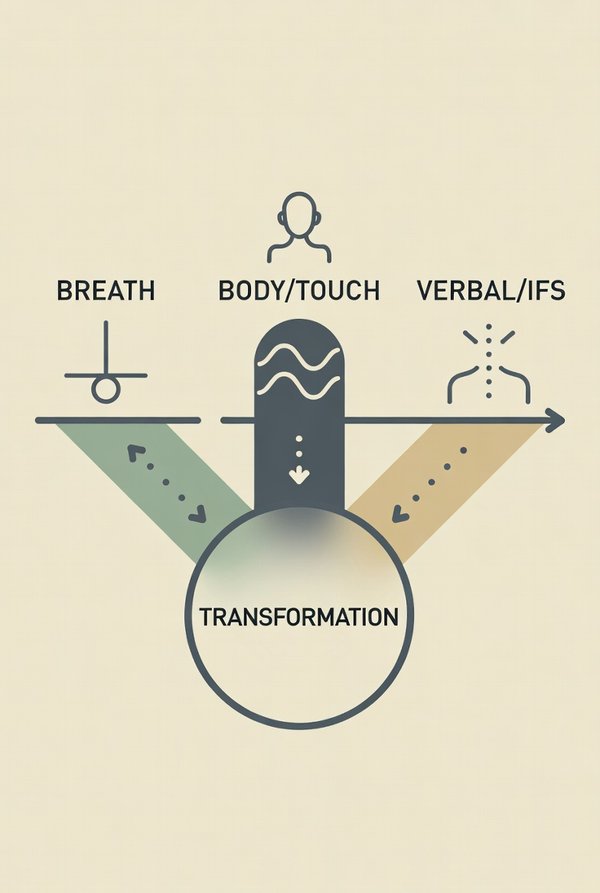
The Three Gateways
There are three ways in. Three doors that lead to the same room. In every session you are always choosing which one the person in front of you needs right now.
Works directly through the brainstem, bypassing the thinking mind entirely. When you change the breath, you speak straight to where survival responses live through the vagal-respiratory coupling. This is why breath is the fastest regulatory tool we have. An extended exhale releases acetylcholine to the sinoatrial node. Six breaths per minute maximises heart rate variability. The breath gateway is physiology before psychology.
Works through interoceptive and proprioceptive pathways — the peripheral nervous system, the fascial network, the body's own sensory intelligence. Touch says something that words cannot say and that breath alone cannot reach. Contact before concept.
Works through the prefrontal cortex and its connections to the limbic system. Language, when used well, creates the distance from experience that allows it to be witnessed rather than relived. A perfectly timed reflection creates the experience of being truly seen that the nervous system has been waiting for. This is where meaning-making happens.
In a session you are always choosing. Someone above the window of tolerance: breath first, then body, then words. Someone dissociated: gentle body contact first to bring them back, then breath to establish rhythm, then words. Someone regulated and ready to process: all three are available.
The No-Tetany Philosophy
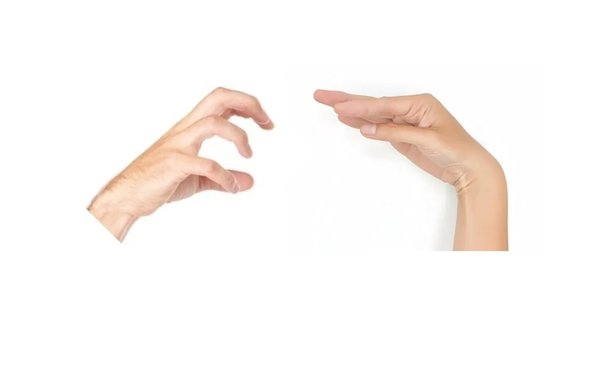
Tetany is the involuntary muscle cramping that happens when CO2 drops from over-breathing. The hands claw. The face contorts. Some breathwork traditions see this as evidence of deep release or spiritual breakthrough.
In Cocoon: tetany means the nervous system has been pushed past its capacity to integrate. The person is not releasing — they are locked. And integration requires regulation, not overwhelm.
The hands beginning to tighten. The face beginning to contract. The breath becoming effortful rather than flowing. The jaw clenching. When you see these signs — slow the breath, add grounding cues, apply touch. This is not timidity. This is precision. The most profound sessions in Cocoon are often the quietest.
Integration over catharsis
The goal is not the most intense experience. The goal is the most integrated one. A small clean fully integrated release is worth infinitely more than a massive cathartic experience the system cannot hold.
Some clients will initially be disappointed by this. Part of your clinical role is educating them: intensity is not the measure. Integration is. And integration happens inside the window of tolerance — not outside it.
A new client, referred by a therapist, has heard that breathwork can be intense. They are visibly guarded in the opening conversation. What do you do? You do not try to reassure them that it won't be intense — that would be both dishonest and unhelpful. Instead you make a genuine offer: we go at the pace your nervous system chooses. You cannot do it wrong. If anything feels like too much, we slow down. That's not failure — that's precision. This reframing often releases the guard more completely than any reassurance would. The client who comes in most defended often ends up being able to go surprisingly deep precisely because they were given complete control over the pace.
Knowing which door to open
The person is stuck in their head and cannot access the body. Cognitive approaches have plateaued. Activation and energy-building are needed. You want to bypass intellectual defences.
There is obvious body armoring or chronic tension. The person cannot feel their body or is disconnected from sensation. A suppressed impulse needs physical completion. Words and breath alone are not reaching the stored material.
The person needs cognitive understanding to feel safe enough to proceed. A specific part or protector needs to be heard before it will let go. Material has surfaced that needs meaning-making before it can integrate. The person is overwhelmed and needs language to create containment.
The three gateways are not techniques to apply rigidly. They are doorways to be discovered in each moment. Most sessions will move through all three. The skill is in the sequencing — reading what the nervous system needs next.
“Between stimulus and response there is a space. In that space is our power to choose our response. In our response lies our growth and our freedom. — Viktor Frankl”
What it looks like when all lenses converge
When a client lies on a mat, breathing deeply, and their body begins to tremble, we can describe what is happening through multiple lenses simultaneously. The neuroscientist sees the activation of the autonomic nervous system. The psychologist sees the emergence of unconscious material. The energy healer sees the movement of blocked chi. The spiritual teacher sees the dissolution of ego. All of these descriptions are true. None is complete. The Cocoon Method weaves them together.
This is not wishy-washy eclecticism. It is integral understanding. The nervous system the neuroscientist studies and the energetic matrix the healer perceives are the same system seen through different instruments. Different maps, same territory.
Why catharsis alone is not enough
Catharsis can become retraumatising. If someone accesses overwhelming material without adequate resources, they are not healing — they are reliving overwhelm. The session leaves them raw, destabilised, and less regulated than when they arrived.
Catharsis can become addictive. Some people become attached to the intensity of cathartic experiences and keep returning for more without ever integrating. The emotional release becomes a substitute for change rather than a doorway to it.
Catharsis without integration changes nothing. You can have the same cathartic release session after session and find that nothing shifts in daily life. The discharge happens inside the session and evaporates.
How we prioritise integration in practice
We assess capacity and build resources. We do not take people into deep water until they can swim.
We monitor activation levels. We intervene when overwhelm approaches. We ensure the breath stays within range.
We dedicate significant time to grounding, stabilising, and meaning-making. Sessions do not end at the peak. They end when the person is fully back, fully present, and able to drive home.
We assign integration practices. We check in about how material is settling. A session with dramatic catharsis that leaves someone dysregulated for days has not served them. A quiet session that ends in genuine groundedness has.
- 1Breath only — three minutes of slow connected breath. Notice what shifts without any touch or words.
- 2Touch only — place both hands on your own belly or shoulders. No breath guidance, just contact. Two minutes.
- 3Words only — speak one sentence out loud about what you are feeling right now. Then be silent for one minute.
- 4Notice: which gateway opened something first? Which felt most accessible? Which felt most foreign?