The Wounded: Exiles
Exiles carry the original pain. The wounds. The overwhelming emotions. The traumatic memories. They are called exiles because the system pushed them out of awareness. Locked away. Hidden. To keep their pain from flooding daily life. Usually young — frozen at the age of the original wounding.
What Exiles Carry
Pain, Shame, and Terror The hurt that was too much at the time. Abandonment. Abuse. Neglect. Humiliation. Loss. The fear from experiences where safety was gone. All of it held in the body, frozen in time. The belief: "I am bad" or "Something is wrong with me." The Beliefs Formed in the Wound "I'm not safe." "I can't trust anyone." "Love always hurts." "I don't matter." These are not logical conclusions. They are conclusions a child formed in the middle of pain. And they feel completely, absolutely true.
Loneliness and Unmet Needs The pain of being unseen, unloved, abandoned, forgotten. The needs that were not met — for safety, love, attention, validation, protection. Not abstract needs but the visceral hunger of a child. Traumatic Memories Images, sensations, and experiences frozen in time. Not memories that are recalled. Memories that are re-experienced. They do not feel like the past. They feel like now. This is what makes trauma different from ordinary memory. This is what makes trauma different from ordinary memory.
The Exile's core message: "I am not okay. I am too much. I am not enough. Please see me." Exiles have been waiting, sometimes for decades, to be witnessed. They carry their burdens in isolation, cut off from the rest of the system. They need to be seen, not fixed.
When Exiles Surface in Session
Body Signs Sudden tears or overwhelming emotion. Feeling small, young, helpless. Body may curl or protect. Voice becoming childlike. Collapsed posture. Shallow, held breathing. Feeling cold. Verbal Signs "I feel like a little kid." The past tense becomes present tense. The language gets simpler and younger. "It's happening again." Core beliefs surface: "I'm bad." "It's my fault." "Nobody loves me." Something very old has arrived. May not be able to articulate — just feeling.
Sudden activation in session. Tears that surprise the client. Shame flooding. Regression in language or posture. Protectors working harder — increased intellectualising, checking out, topic changes. Client says "I don't want to go there." These are not signs to push forward — they are signs to slow down and ensure the container is solid before proceeding.
What Exiles Need
To Be Witnessed Not fixed, not analysed, not explained away. Witnessed. Someone to see what happened and acknowledge the pain. Simply being seen breaks the isolation they have carried, often for decades. To Know It Wasn't Their Fault Most Exiles carry self-blame. They need to hear: "It wasn't your fault. You were a child. You did the best you could." Not as a platitude — they are the truth the exile has never been able to receive.
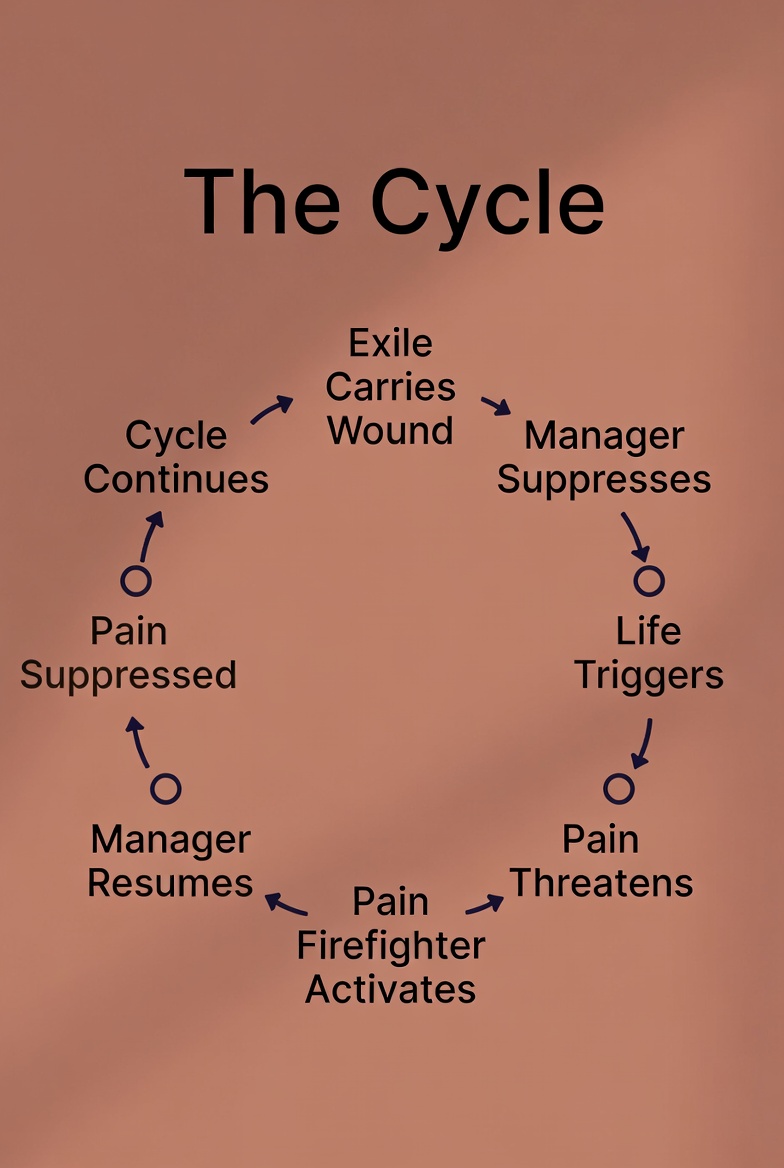
The Dynamic Between Parts: The Cycle
- Exile carries wound and pain (often from childhood) - Manager works to keep Exile suppressed (control, achievement, perfectionism) - Life triggers the Exile anyway (something reminds the system of the wound) - Pain threatens to surface (emotions start to rise) - Firefighter activates to extinguish pain (numbing, distraction, addiction) - Pain is temporarily suppressed (relief, but nothing healed) - Manager resumes control (back to "normal") - Cycle continues until the wound is actually healed
The Cycle — how Exiles, Managers, and Firefighters perpetuate the pattern until the wound is actually healed.
Breaking the cycle: The only way to break this cycle is to heal the Exile. When the wounded part is witnessed, unburdened, and integrated, the protectors no longer need their extreme roles. They can relax. The fire goes out, and no one needs to fight it anymore. This is why working only with Managers (trying to reduce control) or Firefighters (trying to stop behaviours) often fails — the underlying fire is still burning.
No Bad Parts
Every part has a positive intention. This is the most radical idea in IFS. The part that makes you overeat? Trying to comfort you. The part that criticises you? Trying to protect you from external criticism. The part that rages? Trying to create safety through intimidation. The part that numbs? Trying to give you relief from unbearable pain. The part that sabotages success? Trying to protect you from the fear that comes with visibility. The part that keeps you small? Trying to keep you safe from rejection.
When you can find the positive intention in even the most destructive parts, everything changes. You stop fighting yourself. You start actually working with yourself. You start working with yourself. This is not excusing harm. It is understanding it so deeply that transformation becomes possible.