Chapter 4: Why We Begin with the Moon
The Question Every Practitioner Asks
When people first encounter astrology, they usually learn about their Sun sign. It’s the sign most horoscopes are based on, the one people ask about at parties: “What’s your sign?”
So why, in The Cocoon Method, do we focus on the Moon?
The answer lies in understanding what we’re actually trying to heal.
| The Sun | The Moon |
|---|---|
| Who you are becoming | Who you already are at the deepest level |
| Your conscious identity | Your unconscious patterns |
| What you’re creating in the world | What you need to feel safe |
| Operates in daylight | Operates in darkness |
| Your adult self | Your inner child |
The Sun represents our conscious journey of becoming. But emotional patterns, the ones that cause suffering, the ones that repeat despite our best intentions, these operate beneath conscious awareness.
They were installed before we could think. Before we could speak. Before we even knew we were a separate self.
This is the domain of the Moon.
Before Words: The Preverbal Self
Consider what it is like to be a newborn.
You have:
- No language
- No understanding of what is happening
- No way to meet your own needs
- No concept of time (this moment feels like forever)
- No ability to self-soothe
You are completely dependent on others for survival.
If your caregivers do not respond to you, you will die. This is not abstract fear. This is biological reality. The infant brain is wired to experience abandonment as a life-threatening emergency.
An infant cannot distinguish between “my caregiver is temporarily unavailable” and “I am going to die.” The nervous system responds to both the same way: panic, terror, activation.
In this context, the child develops strategies to feel safe. These strategies become wired into:
- The nervous system
- The body
- The emotional patterns that will persist throughout life
The Moon sign shows us exactly what those strategies are.
The Moon as Emotional Operating System
In traditional astrology, the Moon represents emotions, instincts, and needs for security.
But in The Cocoon Method, we understand the Moon as something more specific:
The Moon is the emotional operating system that was programmed in the earliest years of life.
Your Moon sign does not just describe how you feel. It describes what you learned to do with feelings in order to survive emotionally.
It shows:
- The strategy your psyche adopted (usually before you could speak)
- How you manage the overwhelming experience of being small and dependent
- What you need to feel emotionally safe
- How you seek comfort and avoid the unbearable feeling of abandonment
The Brilliant Strategy
This strategy was brilliant. It worked. It kept you emotionally alive.
A child who learned to shut down emotionally survived an environment where feelings were not safe. A child who learned to be hypervigilant survived an unpredictable home. A child who learned to caretake others earned the connection they desperately needed.
The Problem:
The same strategy that once protected you may now have become a prison. The walls you built for safety now keep out the intimacy and aliveness you long for.
| What Protected You | What It Costs Now |
|---|---|
| Emotional shutdown | Inability to connect deeply |
| Hypervigilance | Chronic anxiety, exhaustion |
| Caretaking others | Losing yourself, resentment |
| Perfectionism | Never feeling good enough |
| Independence | Inability to receive support |
| Staying small | Unfulfilled potential |
Understanding your Moon is the beginning of freedom. Not because understanding changes anything on its own, but because it shows you what you’re working with.
The Lunar Instruction
We call this early programming the “lunar instruction.”
It is not just a tendency or preference. It is a command that the psyche feels compelled to obey.
| When the instruction is… | You feel… |
|---|---|
| Satisfied | Emotional safety (even if objectively harmful) |
| Threatened | Anxiety, panic, defensive reactions |
| Violated | Terror, as if survival itself is at stake |
This is why people repeat patterns that hurt them. The lunar instruction does not care about happiness. It cares about emotional survival as defined by the experiences of early childhood.
- A child who learned that anger kept them safe will feel unsafe in peaceful environments
- A child who learned that caretaking earned love will feel worthless when they have nothing to give
- A child who learned that independence meant survival will feel terrified of needing anyone
The pattern continues because the nervous system is still running the old program.
The Moon as Nervous System Pattern
Emotions are not abstract experiences happening somewhere in the mind.
They are physical events:
- Patterns of activation in the autonomic nervous system
- Hormones and neurotransmitters flooding the bloodstream
- Muscle tension and breathing patterns
- Heart rate, digestion, temperature changes
The Moon shows how your nervous system learned to respond to emotional situations.
The Four Elements and Nervous System Responses
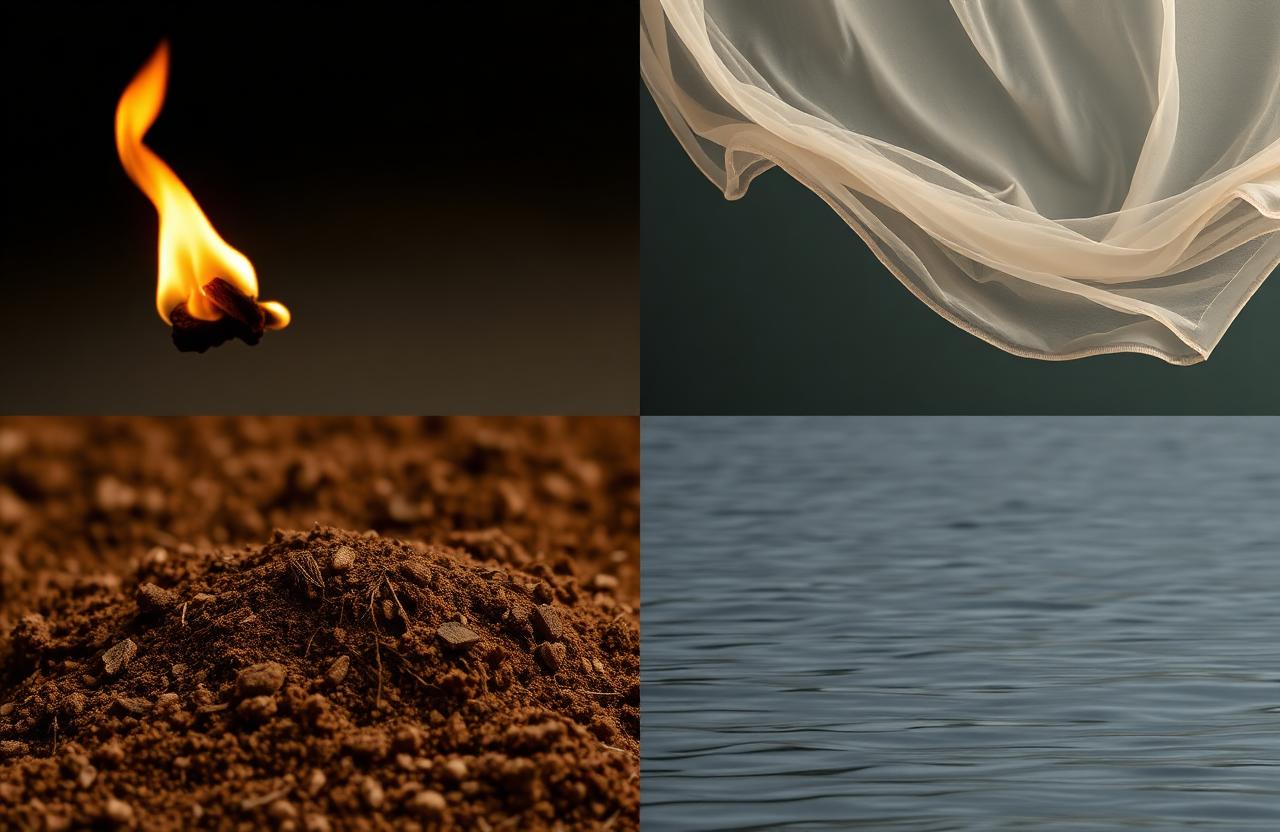
| Element | Nervous System Pattern | Response to Emotions |
|---|---|---|
| Fire (Aries, Leo, Sagittarius) | Sympathetic activation | Move, act, discharge, express |
| Earth (Taurus, Virgo, Capricorn) | Dorsal freeze or steady containment | Contain, ground, stabilize, control |
| Air (Gemini, Libra, Aquarius) | Dissociation, intellectualization | Think, analyze, distance, explain |
| Water (Cancer, Scorpio, Pisces) | Flooding, overwhelm | Feel deeply, absorb, merge, drown |
This is not metaphor. This is physiology.
When you understand a client’s Moon element, you understand how their body processes emotion. This tells you:
- What will help them (element-appropriate interventions)
- What will overwhelm them (mismatched approaches)
- What regulation looks like for them specifically
The Moon as Inner Child
Inside every adult experiencing emotional difficulty is a child who learned to survive in a particular way.
This is not metaphor. It is neurological reality.
How the Brain Retains Early States
Neuroscience has confirmed what depth psychology long understood:
- The brain retains earlier developmental states
- When triggered, adults can literally regress to childhood patterns
- The limbic system does not know what year it is
| What Happens | Why It Happens |
|---|---|
| A 40-year-old executive feels like a scared 5-year-old | Triggered implicit memory activated old neural patterns |
| An accomplished adult can’t ask for help | Childhood learning: “needing = dangerous” still running |
| Someone explodes in rage at minor frustration | 3-year-old’s emotional regulation still in charge |
In moments of stress, intimacy, or vulnerability, the inner child often takes over.
The Moon Shows Your Inner Child
The Moon in your chart reveals:
| Moon Aspect | Inner Child Quality |
|---|---|
| Moon sign | The emotional age and style of your inner child |
| Moon’s house | Where in life the inner child shows up most |
| Aspects to Moon | Additional wounds or gifts the inner child carries |
| Moon’s element | How the inner child processes and expresses emotions |
Moon in Aries: The inner child is fiery, willful, about 3-5 years old. They need to feel powerful and capable. When triggered, they fight.
Moon in Cancer: The inner child is tender, needy, wants to be held. When triggered, they withdraw and seek comfort.
Moon in Capricorn: The inner child is serious, responsible, grew up too fast. When triggered, they shut down and become self-reliant to a fault.
The Moon as Early Experience
The First Seven Years: The Lunar Phase
The first seven years of life are called the “lunar phase” because they are dominated by the Moon principle:
- Bonding
- Emotional learning
- Attachment to caregivers
During this time, the child’s nervous system is being calibrated by their environment.
The Developmental Timeline
| Age | What Happens |
|---|---|
| 0-6 months | Complete merger with mother. No sense of separate self. The mother’s emotional state IS the child’s emotional state. |
| 6-18 months | Beginning separation. The child realizes they are separate from mother. First experience of existential aloneness - the void that the lunar instruction will attempt to fill. |
| 18 months - 3 years | The lunar instruction becomes active. Consistent ways of seeking comfort and avoiding the void develop. Attachment patterns become visible. |
| 3-5 years | The instruction solidifies. Emotional style is recognizable. Defense mechanisms are in place. The “inner child” is fully formed. |
| 5-7 years | First testing of emotional system in the larger world (school, peers). The instruction either adapts or becomes more rigid. |
By age seven, the foundation is complete. Everything that happens afterward builds on this foundation.
Inner child work addresses the root level of emotional patterning, not just surface manifestations. When we heal at this level, everything built on that foundation can shift.
The Moon and the Mother
When we speak of the Moon and the mother, we must be careful.
We are not blaming mothers.
The “mother” in astrological terms is whoever provides primary emotional nurturing in the first years:
- Could be a father
- Could be a grandparent
- Could be a nanny
- Could be another caregiver
And this person’s behavior is not random. It precisely matches what the child’s Moon requires.
The Mother as Mirror
The mother (or primary caregiver) serves as a mirror. She reflects back to the child what the child’s lunar instruction is asking for.
| Moon Sign | What the Child Needs | What Mother Often Provides |
|---|---|---|
| Aries | To fight, to assert, to be strong | A mother who engages, challenges, fights back |
| Cancer | To be held, nurtured, protected | A mother who is emotionally present (or painfully absent) |
| Virgo | Order, correctness, service | A mother who emphasizes doing things right |
| Pisces | Transcendence, escape, merging | A mother who is dreamy, inconsistent, or emotionally unavailable |
The mother is not doing something wrong. She is playing her role in a cosmic arrangement that serves the child’s soul evolution.
Later, the adult may need to grieve, rage, and heal the wounds from this arrangement. But underneath the pain is a kind of terrible perfection: everything happened exactly as the soul needed for its growth.
The Moon as Attachment Style
Modern attachment theory maps closely onto lunar patterns.
Attachment Styles and Moon Patterns
| Attachment Style | Lunar Pattern | What It Looks Like |
|---|---|---|
| Secure | Moon well-aspected, needs met | Comfortable with intimacy and independence |
| Anxious | Water Moons, Moon-Neptune, challenging aspects | Fear of abandonment, need for reassurance |
| Avoidant | Earth Moons, Moon-Saturn | Discomfort with closeness, self-reliance |
| Disorganized | Moon-Pluto, Moon-Uranus, multiple challenging aspects | Conflicting needs, chaotic relating patterns |
Attachment style is not destiny. It can be earned through healing relationships. But understanding the Moon shows us why certain attachment patterns developed and what needs to be healed.
Fire Moons: A Different Shape of Insecurity
Fire Moons rarely appear in attachment tables, and that absence is itself telling. Their insecurity does not look like clinging or withdrawing — it looks like movement.
- Aries Moon:Protests separation through action — confrontation, urgency, doing something rather than feeling the gap.
- Leo Moon:Seeks reassurance through visibility — being seen becomes the proof of being loved.
- Sagittarius Moon:Manages the fear of being held too tightly by staying in motion — distance framed as freedom.
Underneath all three is the same question the other elements ask: will you stay? Fire simply asks it while moving.
The Moon as What You Need But Cannot Name
Perhaps most importantly, the Moon represents the “being” beneath all the “doing.”
In our action-oriented world, we focus on:
- What we accomplish
- How we perform
- What we achieve
The Moon reminds us of:
- Who we are when we’re not performing
- What we need when we’re not producing
- How we feel when we’re simply being human
The Unnamed Need
Many people have a sense that something is missing, something they need but cannot name:
- A longing they can’t articulate
- A hunger that nothing seems to fill
- A feeling of “not quite right” that persists despite external success
The Moon names this need.
| Moon Sign | The Unnamed Need |
|---|---|
| Aries | To matter, to have impact, to feel powerful |
| Taurus | To be held, to feel stable, to have enough |
| Gemini | To be understood, to connect through words |
| Cancer | To belong, to nurture and be nurtured |
| Leo | To be seen, to shine, to be special |
| Virgo | To be useful, to do it right, to be pure |
| Libra | To be partnered, to be beautiful, to create harmony |
| Scorpio | To merge deeply, to be truly known, to transform |
| Sagittarius | To be free, to find meaning, to explore |
| Capricorn | To achieve, to be respected, to build something lasting |
| Aquarius | To be unique, to belong to humanity, to be free |
| Pisces | To dissolve, to transcend, to merge with something greater |
When you know your Moon, you finally have words for what you’ve always felt but could never explain.
Why the Moon is Primary for Healing Work
Summary: The Moon Holds the Key
| What We’re Healing | Where It Lives |
|---|---|
| Unconscious patterns | Moon |
| Preverbal wounds | Moon |
| Nervous system dysregulation | Moon (by element) |
| Inner child | Moon |
| Attachment patterns | Moon |
| The unnamed need | Moon |
The Sun shows who we’re becoming. The Moon shows what we’re healing from.
We cannot become who we’re meant to be (Sun) until we’ve healed the wounds that keep us trapped in old patterns (Moon).
The Moon work comes first.
The Moon Doesn’t Lie
The Moon doesn’t perform. It doesn’t pretend. It simply is.
It holds space for:
- All the ways you learned to be human
- All the ways you learned to love and be loved
- All the ways you learned to survive
- And eventually, all the ways you’ll learn to thrive
When you truly know your Moon, when you can feel its rhythms moving through you, you can meet yourself with:
- Exquisite precision
- Unshakeable safety
- Compassion that needs no words
Practice: Meeting Your Moon
Before reading about your specific Moon sign, take time for this reflection:
Guided Reflection: First Meeting
Find a quiet space. Close your eyes. Take several slow breaths.
Step 1: Think of a recent time when you felt emotionally triggered or upset. Not a major crisis, just a moment when emotions arose strongly.
Step 2: Notice how your body responded:
- Did energy rise up (Fire)?
- Did you freeze or go numb (Earth)?
- Did you move into your head (Air)?
- Did you flood with feeling (Water)?
Step 3: Notice what you needed in that moment:
- To move, act, do something?
- To be held, stabilized, grounded?
- To understand, talk it through, get space?
- To feel, be witnessed, merge with someone?
Step 4: Ask yourself: “How old did I feel in that moment?” Let a number arise without forcing it.
Step 5: To that young part, silently say: “I see you. I’m here. You’re not alone anymore.”
Take a few breaths. Open your eyes when ready.
Reflection Questions
- Your earliest emotional memory:What is the earliest moment you can remember feeling a strong emotion? What was happening? How did you respond?
- Your mother’s style:Without judgment, how would you describe the emotional atmosphere your mother (or primary caregiver) created? Warm? Cold? Chaotic? Controlled? Absent?
- Your pattern:When emotions arise strongly now, what do you automatically do? (Move/act, freeze/control, think/analyze, feel/flood)
- Your unnamed need:Is there something you long for but have trouble naming or asking for? What might it be?
Write for 15 minutes:
“What I learned about feelings as a child was…”
Or: “The thing I most needed but didn’t receive was…”
Let yourself write without censoring. This is for you alone.
Key Takeaways: Chapter 4
| Concept | Key Understanding |
|---|---|
| Why Moon, not Sun | Sun = conscious becoming; Moon = unconscious patterns needing healing |
| Preverbal installation | Emotional patterns installed before language, in infancy |
| Lunar instruction | A command the psyche feels compelled to obey for emotional survival |
| Nervous system patterns | Moon element shows how body processes emotion (Fire/Earth/Air/Water) |
| Inner child | The Moon reveals the age, needs, and wounds of the inner child |
| First seven years | The “lunar phase” when emotional foundation is established |
| Mother as mirror | Caregiver reflects what the child’s Moon requires |
| Attachment style | Lunar patterns correlate with attachment patterns |
| The unnamed need | Moon gives words to the longing we couldn’t articulate |
End of Chapter 4
Next: Chapter 5 - The Four Elements
In Chapter 5, we explore the four elements in depth: Fire, Earth, Air, and Water. You’ll learn how each element processes emotion, what each element needs for regulation, and how to identify your Moon’s element as the foundation for all the healing work to come.