Advanced Concepts: Cellular Memory & Epigenetics
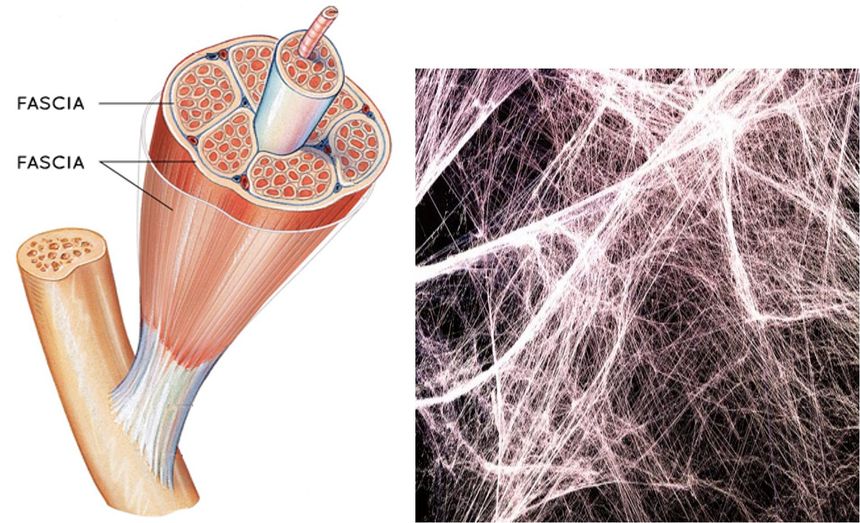
The connective tissue wrapping every muscle, organ, and nerve has been called the body's 'information highway.' Richly innervated, with memory-like properties. Restrictions in fascia often correlate with emotional holding.
Chronic muscle tension is often held emotional material. Wilhelm Reich mapped the body's 'armor' — patterns of muscular tension that defend against feeling, persisting long after the original threat has passed.
A primary site of emotional holding. Connects to the vagus nerve and to our capacity to feel. Unlocking the diaphragm often unlocks stored emotion — sometimes suddenly and profoundly.
Trauma affects gene expression, and these changes can be inherited across generations. Healing work may literally change gene expression. When we heal ourselves, we may be healing patterns that extend back generations and forward to those not yet born.
Presents with chronic anxiety and hypervigilance she cannot explain — a stable, loving childhood with no obvious trauma. Her parents were Holocaust survivors who never spoke about their experiences, but the family atmosphere was permeated by unspoken grief and fear.
During a connected breathing session, Miriam begins to sob. She reports feeling 'grief that is not mine but is also mine.' Afterward, she reports feeling 'lighter than I have ever felt.' Over months of work, her baseline anxiety significantly decreases.
Practitioner Learning: Some of what our clients carry is not theirs alone. Intergenerational trauma is real — it lives in the nervous system, potentially in the cells, passed down through epigenetics and early co-regulation. Healing these patterns heals more than one person.