Chapter Four: The Energetic Lens
““The chakras are the architecture of the soul.” — Anodea Judith”
The energetic lens looks at how life force moves through the system. You cannot see energy with the naked eye. But you can sense it. And you can read the physical signs that show you where it flows freely and where it is stuck. The seven major chakras map human development from survival at the base to spiritual connection at the crown. When energy flows freely through them, there is health and vitality. When it is blocked or excessive, recognisable patterns appear.
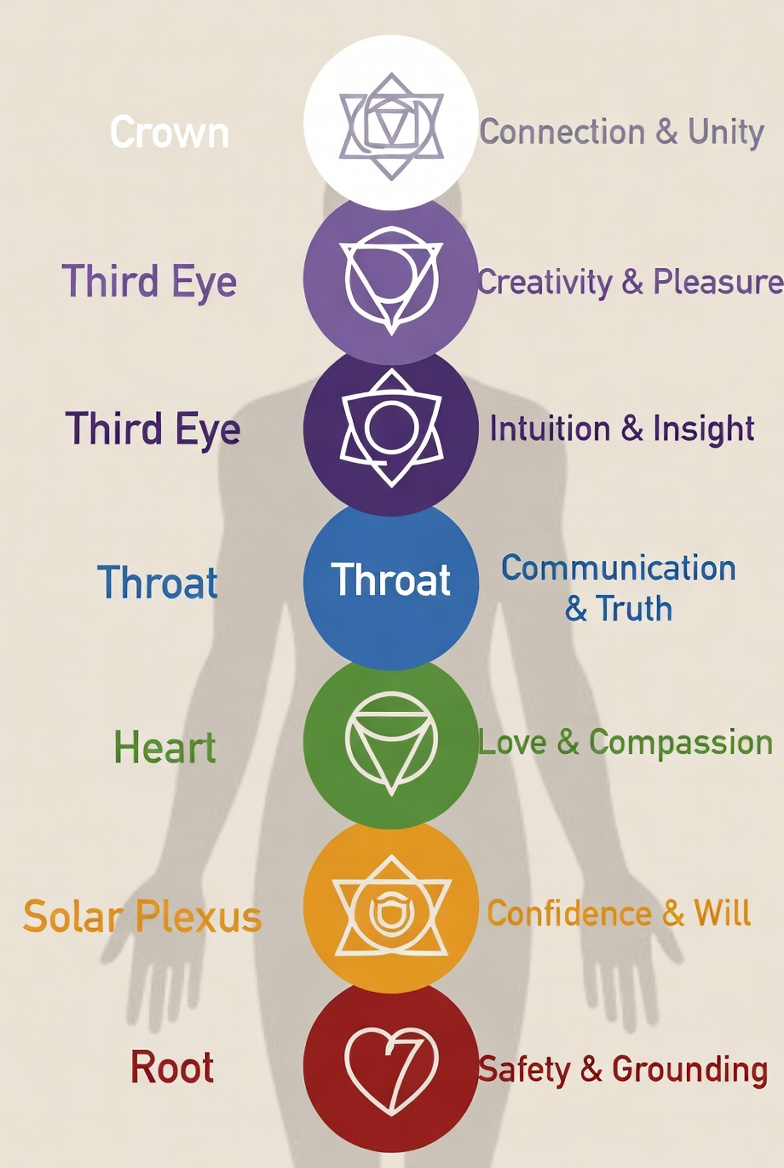
The seven chakras — energy centres from the base of the spine to the crown, each governing a distinct domain of human experience.
The image shows the chakras from Root (base) to Crown (top). You may notice the labelling has a small discrepancy — the second circle from the top is the Sacral (Svadhisthana), governing creativity and pleasure. This has been corrected in the text below for your reference. Worth updating the image label when you revise it.
The Seven Chakras
Root (Muladhara) — Base of Spine — Safety, Survival, Ground
Blocked:
Excessive:
Sacral (Svadhisthana) — Below Navel — Emotions, Sexuality, Creativity
Blocked:
Excessive:
Solar Plexus (Manipura) — Upper Abdomen — Personal Power, Will, Identity
Blocked:
Excessive:
Heart (Anahata) — Centre of Chest — Love, Compassion, Connection, Grief
Blocked:
Excessive:
Throat (Vishuddha) — Throat — Expression, Truth, Authenticity
Blocked:
Excessive:
Third Eye (Ajna) — Between Eyebrows — Intuition, Vision, Insight
Blocked:
Excessive:
Crown (Sahasrara) — Top of Head — Spiritual Connection, Meaning, Unity
Blocked:
Excessive:
Developmental Stages
Each chakra has a primary developmental window. Root: birth to 1 year (also ongoing). Sacral: 6 months to 2 years. Solar Plexus: 18 months to 4 years. Heart: 4 to 7 years. Throat: 7 to 12 years. Third Eye: adolescence and beyond. Crown: throughout life, particularly spiritually active periods. Knowing this helps you understand where a wound likely originated and what kind of early environment shaped this pattern.
Chakra Assessment in Practice
Visual Observation Where does energy seem concentrated? Where does it seem absent? What is the overall energy pattern? Which regions of the body feel alive and which feel flat, collapsed, or held? Assessment Questions Per Chakra Root: does this person seem grounded? Is there basic trust and safety? Are they in their body? Sacral: how do they relate to emotions? Is there flow or rigidity? Solar Plexus: do they have a sense of personal power? Can they assert themselves? Heart: connected or isolated? Can they give and receive? Throat: can they express themselves? Do they speak their truth?
Most people have a combination of open, deficient, and excessive chakras. Look for: where energy is stuck, where it is leaking, where it flows, and what the overall pattern means. No person has all seven perfectly balanced — the art is in reading the specific combination and understanding what it reveals about their history and their needs.
Spiritual Bypass — What It Looks Like
Spiritual bypass (a term coined by John Welwood) is the use of spiritual ideas and practices to sidestep unresolved emotional issues and unfinished developmental tasks. The tell is in the body: upper chakras open, lower chakras blocked. Transcendence without ground. The person can speak beautifully about unity and love while avoiding ordinary human feeling, embodiment, and accountability.
Signs of Spiritual Bypass Talks of love and light while avoiding anger. Detachment called enlightenment. Forgiveness without grief. Positive thinking that bypasses feeling. Floating, ungrounded quality. Upper body elevated, lower body collapsed. How to Work With It Honour the spiritual seeking — it is real. Gently bring awareness to what might be bypassed. Check for grounding and embodiment. True spirituality includes, not escapes, the human experience. Help integrate spiritual experiences into embodied life.
Integrating the Four Lenses
In practice, you hold all four lenses at once. It sounds like a lot. But with practice it becomes natural, like breathing. A client walks in. You notice: collapsed chest and shallow breath (Body Lens), Manager part presenting but grief seems close (IFS Lens), Water deficient and Earth excess (Elemental Lens), heart chakra blocked and lower chakras dominant (Energetic Lens). The integration: this person is protecting their heart. Heavy, stuck energy. The fluid emotional realm is blocked. Grief is present but protected. Your approach: honour the protection, gently invite the heart to open, bring in Water element, work with the Manager to access the grief beneath. The four lenses together show what no single lens ever could.
In pairs. Round 1 (Self-assessment): each person scans their own chakras and writes brief notes — what feels open, blocked, excessive? Share with partner. Round 2 (Partner assessment): Partner A sits simply present. Partner B senses and observes what they notice about each chakra region. Share observations. Partner A gives feedback: what resonated? Switch. Round 3: compare self-assessment with partner assessment. What did the partner see that you did not?