
Chapter Six: Session Planning & Aftercare
“"The session serves the client, not the structure. Trust the arc. Trust the process. Trust yourself. And always, always, meet them where they are."”
Planning a Single Session
Physical Space Setup
☐ Room temperature comfortable (lean warm)
☐ Lighting adjustable (dimmer for relaxation)
☐ Mat and cushions prepared
☐ Blanket available
☐ Tissues within reach
☐ Water ready
☐ Phone silenced
☐ Privacy ensured
☐ Nothing in space to hit or break
☐ Quality speakers, playlist ready and tested
☐ Backup playlist downloaded (no internet dependency)
☐ Your notes reviewed, client history in mind
☐ You have entered Master State
☐ You have grounded yourself
☐ Your energy from previous session has been cleared
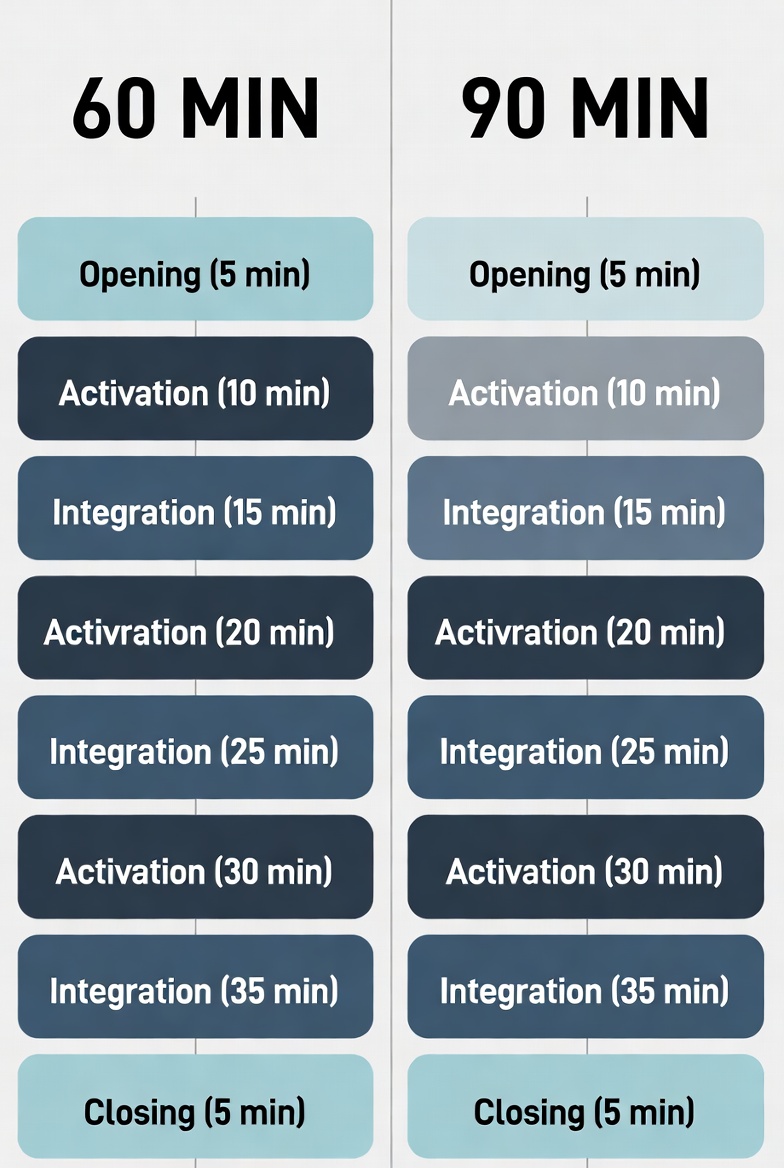
60-min vs 90-min session structure — the complete arc
Opening and closing phases are consistent; activation and integration scale with session length.
Music and Playlist Structure
Music is a powerful co-facilitator. It supports the arc of the session, holds the container, and can evoke states that words cannot. The right music at the right moment can do more than an hour of talking.
| Time (60 min) | Phase | Music Quality | | --- | --- | --- | | 0-5 min | Arrival | Gentle, ambient, soft | | 5-10 min | Logging In | Slow, grounding | | 10-25 min | Activation Build | Intensity gradually increasing | | 25-35 min | Peak Activation | Fullest intensity | | 35-45 min | Integration | Softening, spacious | | 45-55 min | Deep Relaxation | Ambient, very soft | | 55-60 min | Return | Gentle, grounding |
| Time (90 min) | Phase | Music Quality | | --- | --- | --- | | 0-10 min | Arrival | Gentle arrival | | 10-15 min | Logging In | Slow, grounding | | 15-40 min | Activation Build | Building intensity | | 40-55 min | Peak / Plateau | Maximum intensity | | 55-70 min | Integration | Softening | | 70-85 min | Deep Relaxation | Very soft, spacious | | 85-90 min | Return | Gentle return |
Music Selection Principles No lyrics during activation (lyrics engage the cognitive mind). Intensity builds gradually — the music mirrors the breath and body. Transitions are smooth (jarring transitions startle and activate). Volume adjusts with phases (louder for activation, softer for integration). Test playlists with your own nervous system first. Practical Tips Test playlists yourself before using with clients. Download to device — do not rely on internet. Use quality speakers (not phone speakers). Have backup playlists ready. Update playlists regularly (they get stale). Note which tracks work and which do not. Have silence as an option — some integration needs silence.
Designing Multi-Session Journeys
Session 1: Assessment and Foundation More talking than usual. Thorough intake. Very gentle activation (15 min max). Lots of grounding. Clear aftercare. Goals: comprehensive intake, establish relationship and trust, assess nervous system capacity, establish safety. Assess: how do they respond to activation? What is their window of tolerance? What protective patterns appear? Session 2: Building Capacity Check in about integration from Session 1. Moderate activation (20-25 min). Track capacity carefully. Note what emerges. Goal: review first session, build on foundation, deepen trust. Assess: did they integrate Session 1 well? Can they handle more intensity?
Session 3: First Deeper Work Fuller activation if capacity demonstrated. Follow what emerges. Full integration time. First significant work accomplished. Goal: deeper access now that safety is established. This is often the turning point.
| Phase | Sessions | Focus | By the End | | --- | --- | --- | --- | | Foundation | 1-3 | Assessment, relationship, capacity-building | Deep understanding, trust, direction clear | | Deepening | 4-6 | Core material, fuller activation | May include intense releases, themes emerge | | Integration | 7-9 | Working with what has emerged, patterns shifting | Less crisis, more consolidation, building independence | | Completion | 10 | Review journey, acknowledge transformation | Resources for continuing, container properly closed |
Plans are starting points, not scripts. If client arrives activated: skip logging in, go straight to grounding. If major material surfaces early: follow it, abandon your plan. If crisis emerges: handle the crisis, session goals become secondary. If integration takes longer: extend integration, shorten next activation phase. The session serves the client, not the structure.
Aftercare and Integration
Immediate aftercare is non-negotiable. Allow 2-3 minutes of silence. Offer water. Remain present and calm. Do not rush conversation. Check in when they seem ready.
Assessing Groundedness Before They Leave
Ready to Go Clear eye contact. Coherent speech. Knows where they are. Can name what day it is. Steady on feet. Regulated breathing. If NOT Grounded Continue grounding exercises. Have them walk around the room. Cold water on wrists. Eyes open, looking around, naming things. Feel feet on floor. DO NOT let them leave until present.
The Integration Conversation
Your role: listen more than talk. Reflect back what they say. Do NOT interpret their experience. Do NOT compare to other clients. Let them lead.
Good Questions "What stood out for you?" · "What do you want to remember?" · "How are you feeling now compared to when we started?" · "Is there anything you want to say or ask?" · "What do you need right now?" If They Do Not Want to Talk "There's no need to process verbally. Sometimes the body needs time before the mind understands." Respect silence. Not everyone processes through talking.
Specific Aftercare Based on Session Content
If Grief Arose Journaling about what emerged. Permission to continue grieving. Grief rituals if appropriate. Avoid intense conversations for 24 hours. If Anger Arose Safe anger expression practices. Journaling. Movement (running, vigorous exercise). Avoid suppressing — let it continue to move.
If Fear Arose Grounding practices as homework. Safety resources. Consider a check-in sooner than usual. If Big Insight Arose Journaling the insight. Contemplation practice. Action steps if appropriate. Do not rush to act — let it settle first.
Intense exercise same day (nervous system needs to settle). Alcohol or recreational substances (interferes with integration). Major stress or conflict. Processing with unsupportive people. Making big decisions. These are not optional suggestions — they protect the work.
Documentation
What to Document Intake: full health history, mental health history, medications, previous breathwork/therapy experience, goals and intentions, consent forms signed. Session notes: date and duration, client's state at arrival and departure, techniques used, what arose (without excessive detail), homework assigned, notes for next session, any concerns. Why It Matters Tracks progress over time. Protects you legally. Informs future sessions. Required for some certifications. Professional standard. If you are ever questioned about a session, good notes are your protection.
Sample Session Note Format
Client: [Name] Date: [Date] Session #: [Number] Arrival State: [Brief description of how they arrived] Session Content: — Techniques used: [List] — What emerged: [Brief summary] — Key moments: [Notable experiences] Departure State: [How they left — grounded, regulated, etc.] Integration Plan: [Homework, next session focus] Notes for Next Session: [Anything to follow up on]
Design a session for this scenario: New client, Session 3. Sessions 1-2 were gentle, client showed good capacity, reported feeling safer with you. They want to work on long-held grief about their mother's death 5 years ago. Design: (1) How will you set up the space? (2) What's your intention? (3) What music arc will you use? (4) What techniques will you emphasise? (5) What might arise and how will you respond? (6) What aftercare will you provide? Share designs in small groups. Get feedback.
Partner A: just completed an intense session (improvise what emerged). Partner B: facilitator doing aftercare. Practise: assessing groundedness, the integration conversation, providing aftercare instructions, ensuring they are safe to leave. Give each other feedback. Switch roles.
| Time (60 min) | Phase | Music Quality |
|---|---|---|
| 0-5 min | Arrival | Gentle, ambient, soft |
| 5-10 min | Logging In | Slow, grounding |
| 10-25 min | Activation Build | Intensity gradually increasing |
| 25-35 min | Peak Activation | Fullest intensity |
| 35-45 min | Integration | Softening, spacious |
| 45-55 min | Deep Relaxation | Ambient, very soft |
| 55-60 min | Return | Gentle, grounding |
| Time (90 min) | Phase | Music Quality |
|---|---|---|
| 0-10 min | Arrival | Gentle arrival |
| 10-15 min | Logging In | Slow, grounding |
| 15-40 min | Activation Build | Building intensity |
| 40-55 min | Peak / Plateau | Maximum intensity |
| 55-70 min | Integration | Softening |
| 70-85 min | Deep Relaxation | Very soft, spacious |
| 85-90 min | Return | Gentle return |
| Phase | Sessions | Focus | By the End |
|---|---|---|---|
| Foundation | 1-3 | Assessment, relationship, capacity-building | Deep understanding, trust, direction clear |
| Deepening | 4-6 | Core material, fuller activation | May include intense releases, themes emerge |
| Integration | 7-9 | Working with what has emerged, patterns shifting | Less crisis, more consolidation, building independence |
| Completion | 10 | Review journey, acknowledge transformation | Resources for continuing, container properly closed |