Pranayama: The Yogic Science of Breath
Origin: India, Rig Veda, approximately 1500 BCE. The word Pranayama combines two Sanskrit terms. Prana means life force, vital energy, or breath of life. Ayama means extension, control, or expansion. Pranayama is literally the extension and control of life force through breath.
Pranayama is the fourth limb of Patanjali's eight-fold path — sitting between the physical postures and the deeper meditative practices. The body first, then breath, then mind. Breath is the bridge.
Notice: pranayama sits between the physical preparation and the deeper meditative practices. Breath is the bridge — you cannot master the mind without first mastering the breath.
The three primary nadis
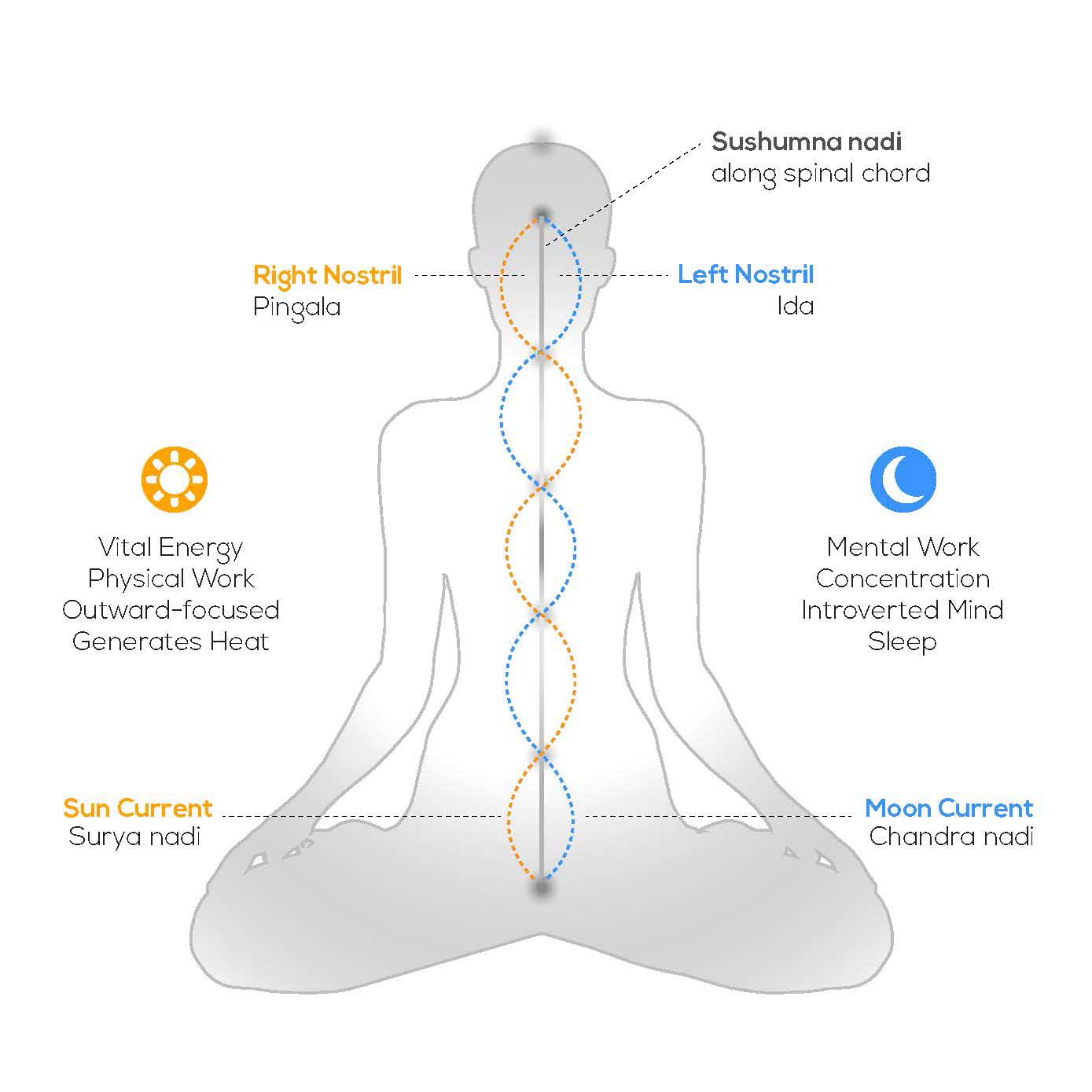
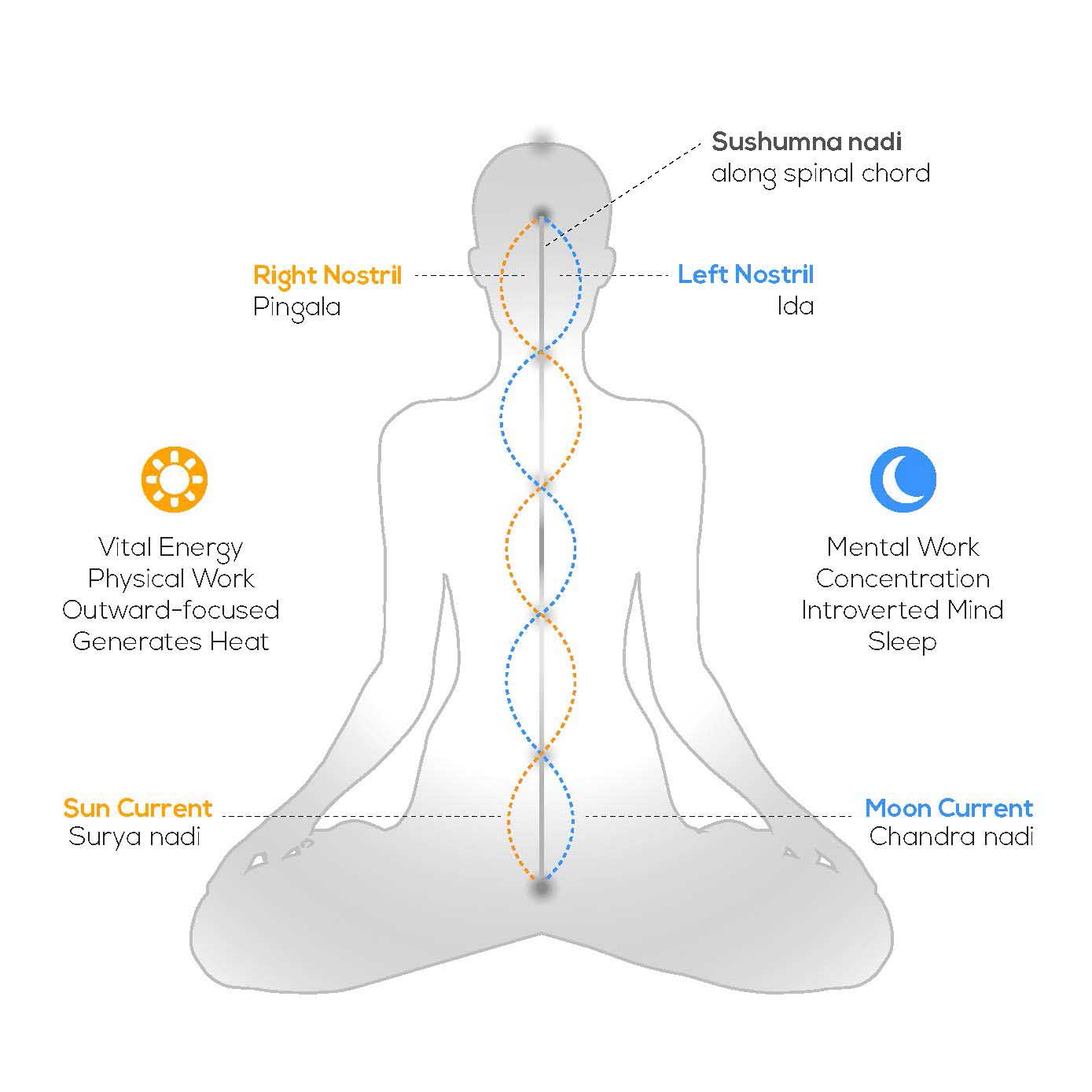
The yogic system mapped 72,000 subtle energy channels (nadis) throughout the body. Three are primary. Ida — the lunar channel, left side, cooling and calming. Pingala — the solar channel, right side, activating and warming. Sushumna — the central channel, through the spine. When prana flows through sushumna, states of balance and integration become available. Most transformative breathwork experiences involve the activation of sushumna.
The six key techniques and what they do
Alternate nostril breathing. Balances ida and pingala, harmonising the two hemispheres. Calming without sedating. Use when a client is stuck between activation and collapse.
Skull shining breath. Rapid forceful exhale, passive inhale. Energising and clearing. Raises prana. Use in the early activation phase when more energy is needed.
Bellows breath. Forceful in and out. More intense than kapalabhati. Use sparingly and with care — it can push past the window of tolerance quickly.
Victorious breath. Slight throat constriction creates an ocean sound. Simultaneously calming and warming. This is close to what we use in connected conscious breathing.
Humming exhale. Vibration throughout skull. Deeply calming for anxiety. Activates the parasympathetic system. Excellent for integration after activation.
Cooling breath through curled tongue. Reduces heat, calms anger. The counter to bhastrika. When a session runs too hot, sitali brings the temperature down.
The Five Pranas — Clinical Reading Guide
Prana is not a single undifferentiated energy. It manifests in five forms called vayus, each governing different functions. Understanding these gives you a more precise internal map of what the breath is doing — and what a client's breathing pattern is saying about how they move through life.
Chest region, moves inward and upward. Governs the drawing in of energy on all levels. Clinical sign: clients who struggle to receive — love, help, compliments — often show shallow, incomplete inhalation. The breath stops before it can fill them.
Lower abdomen and pelvis, moves downward and outward. Governs all letting go and elimination. Clinical sign: clients who hold on — to the past, resentments, relationships — often show incomplete, held exhalation. The breath never fully surrenders.
Navel centre, moves in a churning spiral. Governs digestion of all kinds — food, experience, emotion. Clinical sign: when a client cannot metabolise what has arisen in a session, samana vayu is deficient. Integration practices work here.
Throat and head, moves upward. Governs expression, growth, speech, and access to higher states. Clinical sign: when a client cannot find words, or when expansion feels ungrounded, udana vayu is at play.
Pervades the whole body, moves in all directions. Governs the distribution of energy everywhere. Clinical sign: when one area stays numb while others activate, vyana is blocked there. The whole-body aliveness clients report in deep breathwork involves vyana vayu flowing freely.
You do not need to use vayu language with clients. But this map gives you more precision — a vocabulary for your own internal understanding of what is happening breath by breath in any session.