Qi Gong: The Taoist Approach
While the yogis in India were developing pranayama, the Taoists in China were mapping their own understanding of breath and life force. They called it Qi — the vital energy that animates all living things, flowing through channels they called meridians. Qi Gong literally means "energy cultivation." What is remarkable is how precisely the Taoist and yogic maps correspond — different languages describing the same underlying reality.
The Three Treasures
The foundational energy inherited from parents and stored in the kidneys. Jing is like a battery that depletes over a lifetime. Conservation of jing is why Taoists emphasise moderation and sustainable practice.
The dynamic force that animates us day to day. Qi is replenished through breath, food, and connection with nature. It flows through the meridians and can be cultivated through practice. This is what we work with most directly in breathwork.
Shen — Spirit: The most refined energy, associated with consciousness and spiritual development. When jing and qi are abundant and balanced, shen naturally flourishes. The expanded states that can arise in deep breathwork are often described as shen becoming available.
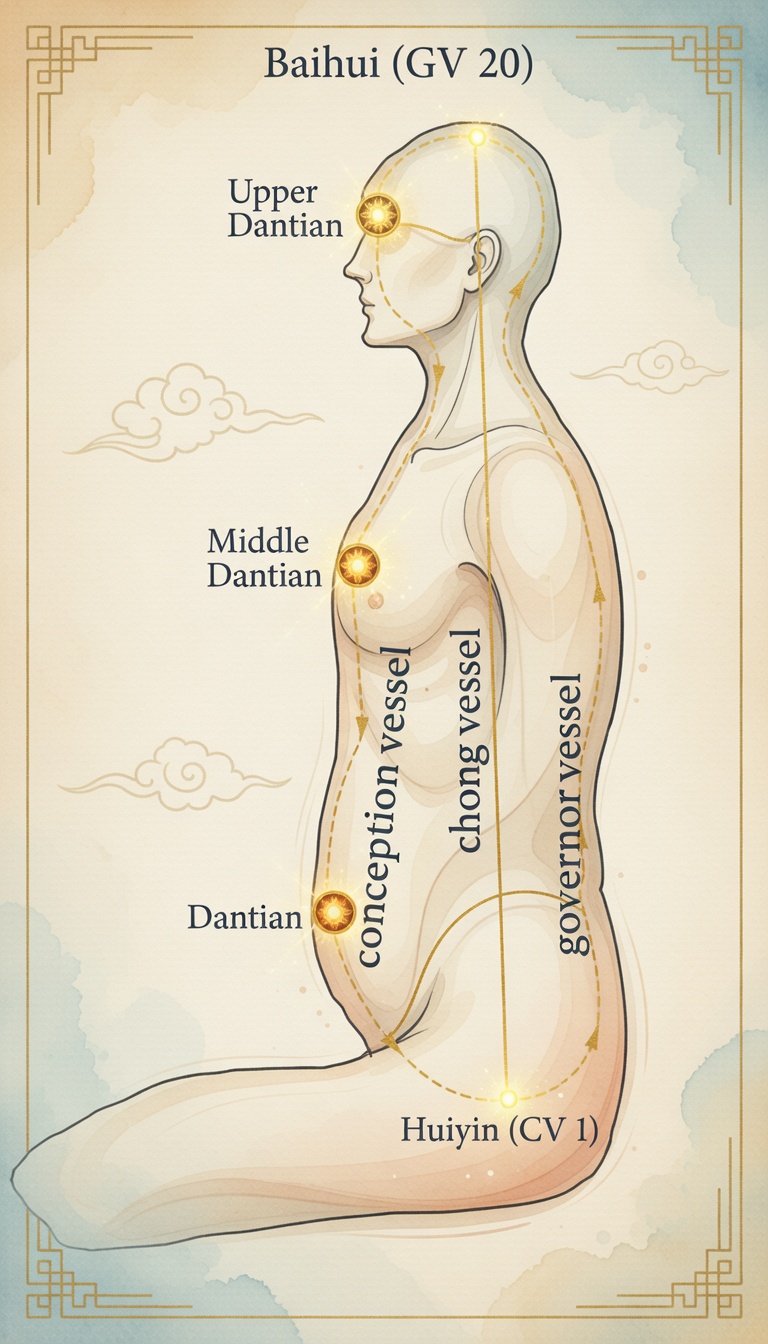
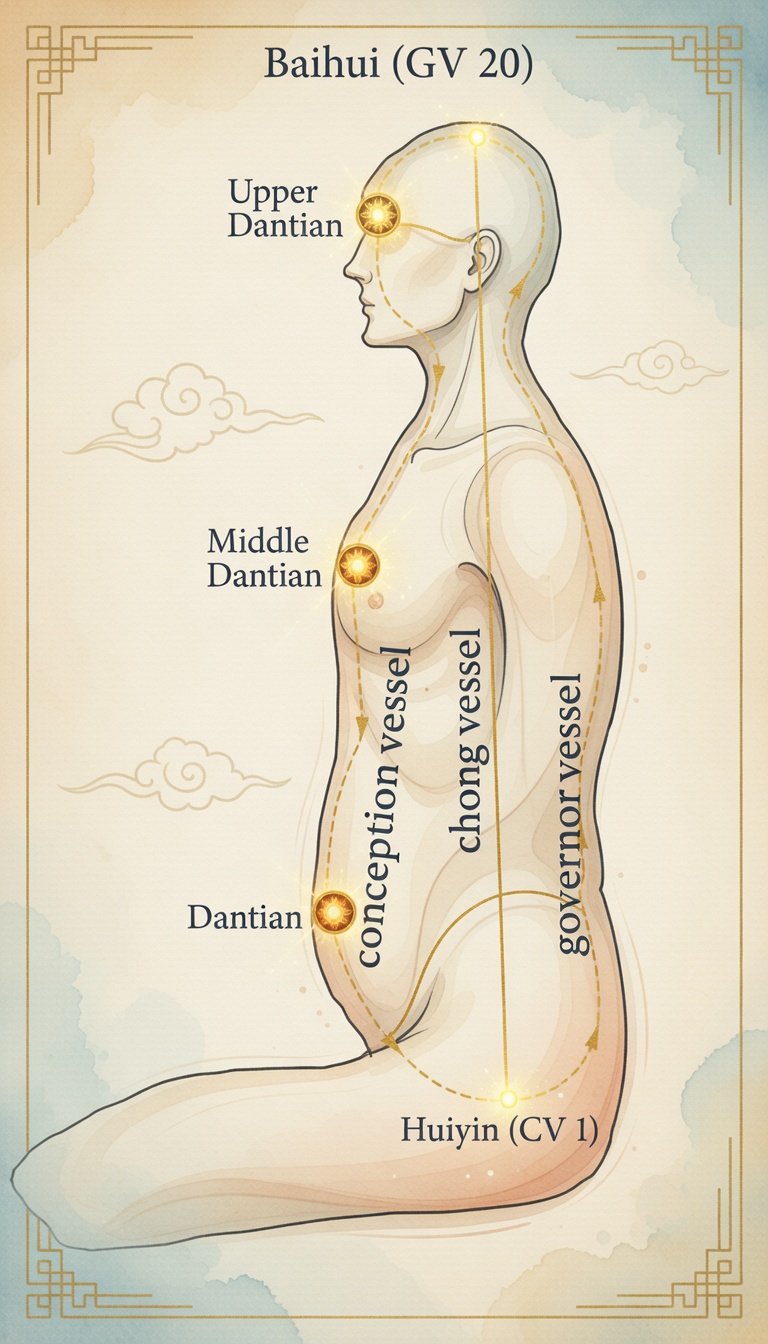
The Three Dantians
In sessions: we typically begin with the lower dantian — establishing ground, stability, and presence. As the session deepens, energy naturally rises to the middle dantian where emotional processing happens. In rare, profound sessions, energy reaches the upper dantian and the client may report insights or expanded clarity that persist beyond the session.
When a client reports feeling 'ungrounded' or 'floaty' after breathwork, they have likely moved energy up without establishing the lower dantian first. The clinical response is always the same: bring them back to the belly, to the floor beneath them, to the weight of the body. Ground before you go up.
Taoist Breathing Principles
Before learning advanced techniques, return to natural breathing. Many Qi Gong practices begin simply by observing breath without trying to change it — letting the body's innate wisdom restore healthy patterns. Observation before intervention.
Like the yogis, the Taoists emphasised breathing into the lower belly, engaging the diaphragm fully and massaging the internal organs with each cycle. The belly leads; the chest follows.
An advanced technique — the belly draws in on inhale and expands on exhale. The opposite of natural breathing. Creates strong internal pressure, used in martial arts and for moving energy up the spine. Not introduced to clients without preparation.
The most subtle form — breath becomes almost imperceptible, as gentle as a baby breathing in the womb. The return to original nature. In deep breathwork states, clients sometimes enter this naturally. It is a sign of profound settling, not something to interrupt.
- 1Pranayama — Nadi Shodhana (5 min): Sit upright. Close right nostril with thumb, inhale left for 4 counts. Close both, brief pause. Open right, exhale for 4. Inhale right 4. Close, pause. Exhale left 4. Repeat 8 rounds. Notice the quality that emerges.
- 2Qi Gong — Lower Dantian Breathing (5 min): Stand with feet shoulder-width, knees soft. Both hands on belly three fingers below navel. Breathe slowly through nose, directing breath into your hands. Imagine filling a warm golden sphere at your centre. Stay here for 5 full minutes.
- 3Connected Conscious Breath (5 min): Lie down. Full circular breath — inhale into belly and chest, exhale without pause, immediately back in. No gap between exhale and inhale. Let the breath move you. Notice what arises.