Chapter 1: Welcome to The Cocoon Method
Before You Begin: A Moment of Arrival
Before you read another word, I want to invite you to pause.
Place your feet on the ground. Feel the weight of your body in the chair, on the cushion, wherever you are sitting. Take a breath. Notice it coming in. Notice it going out.
You have arrived somewhere.
This is not just another training manual. This is not information to be consumed and filed away. What you hold in your hands is a journey. And like any true journey, it requires that you actually show up. Not just your mind, hungry for new concepts and frameworks. But your body. Your breath. Your attention. Your willingness to be changed by what you encounter.
- Feel your hands holding this book or device
- Notice the temperature of air on your skin
- Notice any sounds in your environment
- Notice sensations in your body right now
- You don’t need to change anything. Just notice.
This is the first practice of The Cocoon Method: arriving. Becoming present. Landing in this body, in this moment, before we attempt to understand anything.
Because the truth is, all the knowledge in the world is useless if we are not actually here to receive it.
Welcome. Now, let us begin.
A Personal Welcome from Mariano
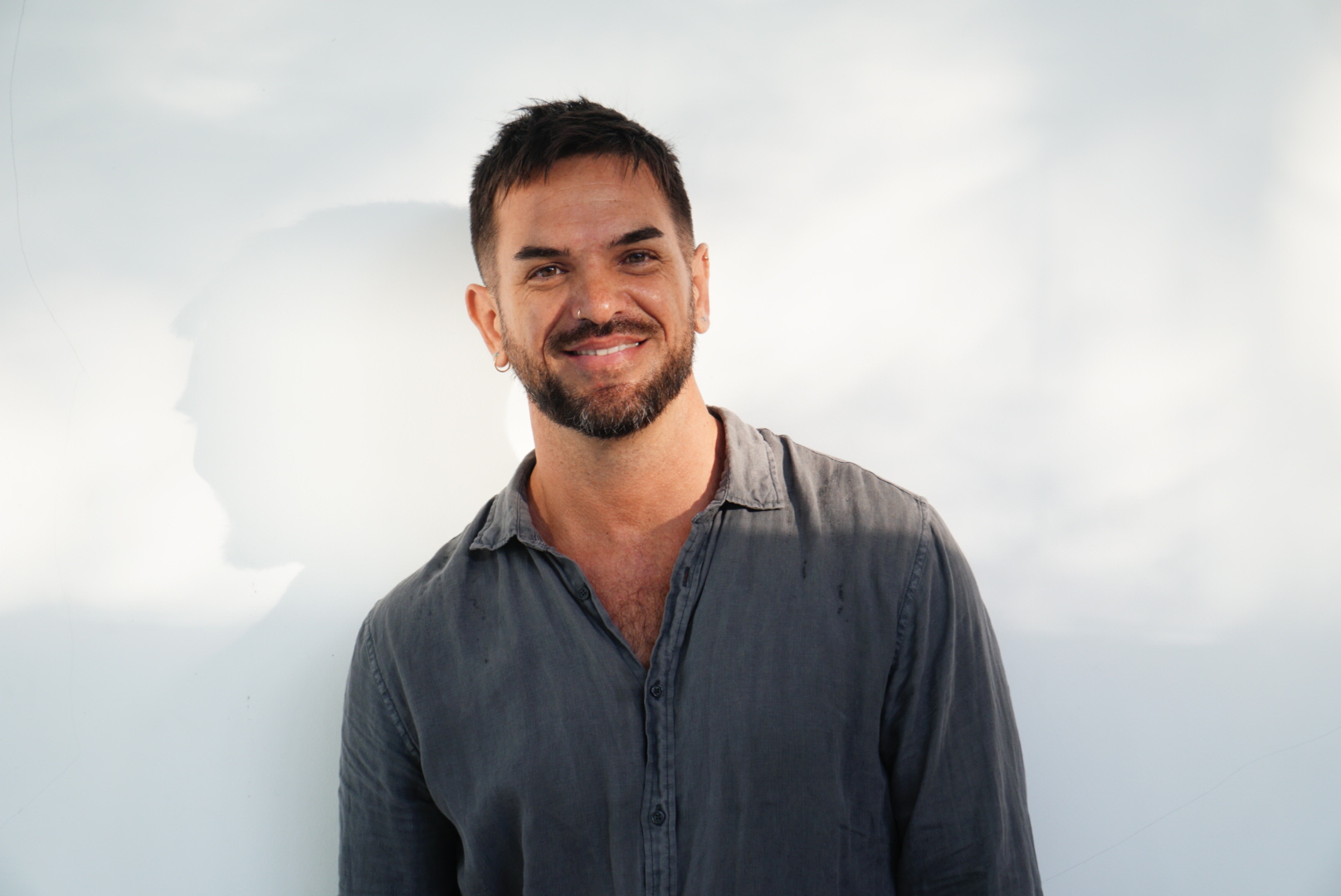
I am Mariano, and I feel truly honoured to walk beside you on this journey.
I want to share how this work came to be, because understanding the origins of a teaching helps us receive it more fully. And because I want you to know that The Cocoon Method did not emerge from one person’s vision alone. It was born from a meeting, a partnership, a weaving together of two different paths that discovered they were walking toward the same destination.
My Path
I grew up in Uruguay, in a world that felt unsafe to my sensitive soul. From a young age, I understood that I needed to protect myself. The world seemed full of threats, of energies that could overwhelm me. I felt too open, too permeable, too vulnerable.
So I built armor.
Martial arts became my first refuge. I trained seriously for years. Learning to fight was learning to survive. It gave me boundaries when I had none. It taught me that my body could be strong, could defend, could create space between myself and a world that felt too close.
But armor, while protective, is also isolating. The walls that keep danger out also keep connection out.
Yoga found me next. The practice called to something deeper than my need for defense. I went deep into the philosophy, reading ancient texts, seeking teachers, studying with gurus. I was hungry for understanding, for wisdom, for a framework that could make sense of human experience.
Yoga opened doors, but it also revealed how much I was still living in my head. I could discuss philosophy brilliantly. But there was a gap between my understanding and my actual experience. I knew about the body. I was not yet fully in the body.
Then astrology entered my life.
Not newspaper horoscopes. Real astrology. Psychological astrology. I found the Astroterapéutica school in Argentina, and slowly, gently, something in me began to settle.
Here was a tradition that used astrology not to predict, but to understand. Not to tell fortunes, but to make sense of a life. For the first time I had language for things I had carried quietly for years.
I studied for years. And somewhere in the middle of that study, I found the Moon — and with it, the moment I stopped believing something was wrong with me. My sensitivity was not a flaw. It was a pattern with a history, and patterns can be understood and cared for.
The Moon in the birth chart holds the key to emotional patterns. It shows not just how we feel, but what we learned to do with feelings in order to survive.
This became my specialty. But something was still missing.
I could see patterns clearly. I could name them, explain them, trace their origins. But naming a pattern is not the same as healing it. My clients would have profound insights, would recognize themselves in the astrological symbolism. And then… they would continue the same patterns.
Why? Because intellectual understanding, while valuable, is not enough. The patterns are embodied. They live in the nervous system. They cannot be changed by thinking alone.
I knew this. But I did not know what to do about it.
Then I met Nina.
The Meeting That Changed Everything
Nina came from a different world than mine. Where I had looked for understanding through the mind, she had gone into the body:
- Breathwork
- Somatic therapy
- Nervous system regulation
- Inner child healing
- IFS (Internal Family Systems)
She had created The Cocoon Method — a complete approach to emotional transformation, weaving together the body, the breath, the nervous system, and the inner child. It was hers first. I joined it later, and together we let it grow.
When we met, something remarkable happened. We discovered we had been approaching the same territory from opposite directions:
| Mariano Brought | Nina Brought |
|---|---|
| The MAP (astrology) | The METHODS (somatic transformation) |
| Precision in seeing patterns | Tools for actually changing them |
| Understanding the “why” | Working with the body directly |
What we found between us was a kind of alchemy: two ways of seeing that transmuted into something neither of us could have made alone. This work has remained a shared practice since 2024.
And Nina dove into astrology. She discovered that the precision of the birth chart added a dimension to her work that had been missing. She could now see why certain clients responded to certain approaches.
Together, we developed something neither could have developed alone.
This is what you hold in your hands. This is The Cocoon Method.
The Core Philosophy: True Healing Begins with Remembering
There is a phrase that has become the cornerstone of this work:
True healing does not begin with fixing. It begins with remembering.
We live in a culture obsessed with fixing. Something is wrong with you, so let us fix it. You have anxiety, so let us eliminate it. You have patterns that cause suffering, so let us eradicate them.
But what if nothing is actually broken?
Patterns as Adaptations
Consider this: every pattern you have, no matter how painful, no matter how self-defeating it seems, was once a solution. It was the best response your young psyche could create to an impossible situation.
| The Pattern | The Original Solution |
|---|---|
| Shutting down emotionally | Surviving an environment where it wasn’t safe to feel |
| Hypervigilance | Responding intelligently to unpredictable danger |
| People-pleasing | Ensuring connection when love felt conditional |
| Perfectionism | Earning safety through being “good enough” |
| Emotional flooding | Staying connected to caregivers through intensity |
The child who developed these patterns was not broken. They were brilliantly adaptive. They found ways to survive.
The Problem: The solutions outlived the situations that required them.
You are no longer a child. The environment has changed. But the nervous system does not know this. The emotional operating system installed in the first years of life keeps running its programs, keeps responding to the present as if it were the past.
This is not a flaw. It is simply how we work.
What “Remembering” Actually Means
Healing is not about fixing what is broken. It is about updating what is outdated.
And this process begins with remembering.
Remembering does not necessarily mean recalling specific events (though it can). More fundamentally, it means:
- Reconnecting with the part of you that created these patterns
- Meeting the child who needed these defenses
- Understanding, from the inside, why you became who you became
| Analyzing from Outside | Remembering from Inside |
|---|---|
| “I have abandonment issues” | Feeling the terror of the child who feared being left |
| “My attachment style is anxious” | Sensing the desperate reaching in your body |
| Intellectual understanding | Felt experience |
| Can continue for years | Creates conditions for change |
Many people can describe their patterns perfectly. They can articulate their attachment style, name their defenses, trace their issues back to childhood. But this intellectual understanding, while valuable, is not the same as remembering.
Remembering is a felt experience. It happens in the body, not just the mind. It involves actually contacting the emotions that were present when the patterns formed.
This is why the somatic work is essential. The patterns we carry are not just mental constructs. They are embodied. They live in our tissues, our posture, our breathing, our muscle tension. They cannot be changed by thinking alone.

Why “Cocoon”? The Transformation Metaphor
The name was not chosen lightly. It carries layers of meaning essential to understanding this work.
What Actually Happens Inside a Cocoon
Most people have a vague sense that a caterpillar goes in and a butterfly comes out. But the process is far more radical:
Stage 1: Dissolution
- The caterpillar’s body breaks down almost completely
- It releases enzymes that digest its own tissues
- It becomes primordial soup
- Almost nothing of its caterpillar structure remains
Stage 2: Reformation
- Imaginal cells (dormant all along) activate
- These cells carry the blueprint of the butterfly
- They multiply, organize, create entirely new structures
- Wings, compound eyes, proboscis form
The Result: The butterfly is not a modified caterpillar. It is an entirely new creature.
What This Teaches About Transformation
| What Doesn’t Work | What Does Work |
|---|---|
| Adding wings to caterpillar self | Allowing old structures to dissolve |
| Pasting new behaviors over wounds | Creating safety for real change |
| Growth without any death | Tolerating not knowing who you’ll become |
| Changing while staying the same | Surrendering to the process |
This is terrifying to the ego. The ego wants growth without death. Development without dissolution. But real transformation does not work this way.
At some point in the healing journey, we must enter the cocoon. We must be willing to let the old structures soften. We must tolerate not knowing who we will be on the other side.
Many come to healing work wanting the butterfly without the cocoon. They want transformation without dissolution. They want to change patterns without feeling the pain those patterns protect them from.
This is understandable. It does not work.
The Art of the Cocoon
The Cocoon Method asks us to create safe enough containers that we can actually enter the cocoon. This means building:
- Sufficient resources
- Sufficient support
- Sufficient nervous system capacity
So we can tolerate the dissolution phase without being overwhelmed.
This is not about retraumatizing. It is not about diving recklessly into wounds without support. That approach floods the system with more than it can process.
The art is in titration:
- Moving slowly
- Building safety first
- Creating a cocoon strong enough to hold us through dissolution
In our work, we create cocoons. Not literally, but energetically, relationally, symbolically. We create spaces where it is safe enough for old structures to soften, where defended parts can relax, where what has been hidden can finally be seen.
This is sacred work.
The Four Pillars of The Cocoon Method
The method integrates four streams of knowledge. Each is essential. Each is incomplete without the others.
Pillar 1: Astrological Psychology (The Map)
What it is:
For thousands of years, humans have looked at the sky and seen patterns. They observed correlations between celestial events and earthly experiences. They developed symbolic systems for interpreting these correspondences.
This is astrology. Not fortune-telling. Not superstition. A symbolic language for understanding patterns that move through human experience.
How we use it:
Modern astrological psychology understands the birth chart as a map of the psyche:
| Component | What It Reveals |
|---|---|
| Planets | Different drives, needs, functions within us |
| Signs | How these drives express themselves |
| Houses | Areas of life where they play out |
| Aspects | Relationships between parts of ourselves |
The Moon specifically:
In The Cocoon Method, we focus on the Moon because it reveals your emotional operating system - programmed in the earliest years of life.
The Moon sign does not just describe how you feel. It describes what you learned to do with feelings in order to survive emotionally.
The Moon shows:
- The strategy your psyche adopted (usually before you could speak)
- How you manage the vulnerability of being human
- What you need to feel emotionally safe
- How you seek comfort and security
This strategy was brilliant. It worked. It kept you emotionally alive. But now, as an adult, the same strategy may have become a prison. The walls built for safety now keep out intimacy and aliveness.
Understanding your Moon is the beginning of freedom. Not because understanding alone changes anything, but because it shows you what you are working with.
Pillar 2: Nervous System Regulation (The Body)
The fundamental truth:
Emotions are not abstract experiences happening somewhere in the mind. They are physical events:
- Patterns of activation in the autonomic nervous system
- Hormones and neurotransmitters in the bloodstream
- Muscle tension and breathing patterns
- Gut sensations and heart rate changes
When you feel fear, your body changes:
- Heart rate increases
- Muscles tense (preparing for fight/flight)
- Breathing becomes shallow and rapid
- Digestion stops
- Pupils dilate
- Attention narrows
This is not metaphor. This is physiology.
Polyvagal Theory (Stephen Porges):
We now understand that the autonomic nervous system has three main states:
| State | Function | Physical Signs |
|---|---|---|
| Ventral Vagal | Social engagement, safety | Relaxed face, easy breath, connection |
| Sympathetic | Mobilization (fight/flight) | Rapid heart, tense muscles, alertness |
| Dorsal Vagal | Immobilization (freeze/shutdown) | Collapsed posture, numbness, disconnection |
How the Elements Relate:
| Element | Nervous System Tendency | Stress Response |
|---|---|---|
| Fire Moons | Sympathetic activation | Fight, action, escape through doing |
| Earth Moons | Dorsal freeze | Rigidity, shutdown, immobilization |
| Air Moons | Dissociation | Escape into thinking, leave the body |
| Water Moons | Overwhelm | Flooding, drowning in emotion |
What calms a Fire Moon may agitate a Water Moon. What grounds an Earth Moon may frustrate an Air Moon. One size does not fit all. This is why the astrological map matters.
Pillar 3: Somatic Awareness (The Felt Sense)
The problem many face:
There is a profound difference between knowing about your emotions and actually feeling them. Many people, especially with certain Moon configurations, have learned to observe their feelings from a safe distance.
They can:
- Describe emotions accurately
- Analyze patterns brilliantly
- Explain their psychology sophisticatedly
But they do not actually inhabit their emotional experience. They observe from behind glass.
The Felt Sense (Eugene Gendlin):
The felt sense is:
- The unclear, bodily awareness of a situation
- Not emotion exactly, not thought exactly
- Something underneath both
- A knowing that lives in the body
| Intellectual Understanding | Felt Sense |
|---|---|
| Knowing ABOUT emotions | Actually FEELING them |
| Can talk about feelings endlessly | Presence with what is |
| Operates at surface | Operates at depth |
| Can continue years without change | Creates transformation |
Why this matters:
Many people are in therapy for years, gaining ever more sophisticated understanding of their patterns, without actually changing.
- Understanding operates at one level
- Transformation operates at another
- The bridge between them is the felt sense
The Cocoon Method trains this capacity. We practice presence. We learn to sense from the inside. We develop tolerance for uncomfortable sensations. We discover that what we have been avoiding, when actually felt, is often more bearable than we feared.
A note on difficulty:
For many people, the body has become enemy territory - a place of pain and discomfort to be escaped. Returning to body awareness means returning to what has been avoided. It can bring up grief, fear, rage.
This is why we move slowly. This is why we build resources first. We need sufficient capacity to be with what arises without being overwhelmed.
Pillar 4: Inner Child Healing (The Wound)
The neurological reality:
Inside every adult experiencing emotional difficulty is a child who learned to survive in a particular way. This is not metaphor. It is neurological reality.
The patterns established in the first years of life are stored in implicit memory:
| Implicit Memory Characteristics | What This Means |
|---|---|
| Operates beneath conscious awareness | You don’t know it’s running |
| Doesn’t feel like remembering | Feels like “the way things are” |
| When activated, past feels present | You react as if then is now |
| Adult mind can’t override it | Understanding isn’t enough |
Why patterns persist:
The adult mind may understand perfectly well that:
- The current situation is not dangerous
- The current partner won’t abandon like the parent did
- We are safe now
But the implicit memory system does not process this information. It continues responding based on original learning.
The inner child is still there:
- Still waiting
- Still running the same programs
- Hoping they will finally work
- Hoping to finally create the safety and love that weren’t available then
What heals:
Healing happens when this child is finally seen. When the adult self can turn toward the young self with the compassion, understanding, and presence that were missing. When the child receives, finally, what they always needed.
This is not about:
- Blaming parents
- Getting stuck in the past
- Wallowing in wounds
It is about:
- Updating the system
- Showing the child things are different now
- Offering new experience
- Honoring old strategies while creating new ones
This is delicate work. It cannot be rushed. It requires genuine compassion, not performed compassion. The child will know the difference.
The Cocoon Method provides specific inner child practices for each Moon sign, because each Moon carries a particular childhood wound and requires a particular kind of healing.
What This Training Offers and What It Does Not
What You Will Gain:
Understanding:
- Your own emotional patterns with precision
- A framework for understanding others compassionately
- Why people are the way they are
- The logic behind seemingly illogical behavior
Practical Tools:
- Breathwork techniques tailored by element
- Body awareness practices
- Nervous system regulation by Moon sign
- Inner child protocols
- Flower essence recommendations
- A complete session framework
Compassion:
- For human emotional struggle
- For your own patterns
- The foundation of effective healing work
What This Training Will NOT Do:
| It Will NOT | Instead, It Will |
|---|---|
| Make you a professional astrologer | Teach you to use the Moon as a powerful diagnostic tool |
| Give you techniques to “fix” people | Give you a way of seeing and being present |
| Bypass your own healing work | Require your own healing as foundation |
| Create instant transformation | Provide tools that require practice and time |
| Capture the full complexity of any human | Offer one powerful lens among many |
If astrology captures your heart along the way, pursue deeper training. We provide resources at the end for those who want to continue.
Who Is This Training For?
This training serves anyone who works with human emotional experience:
| If You Are A… | You Will Gain… |
|---|---|
| Therapist/Counselor | New lens for client patterns, integration with existing approach |
| Yoga Teacher | Understanding why students respond differently to same instruction |
| Breathwork Facilitator | Insight into different emotional releases and resistances |
| Bodyworker/Somatic Practitioner | Language and framework for what you sense |
| Coach | Understanding resistance, self-sabotage, unconscious patterns |
| Healer (any modality) | Psyche understanding alongside body/energy work |
| Teacher | Emotional needs that drive behavior |
| Psychologist | Archetypal and astrological perspectives |
| Individual seeking self-understanding | Deep dive into your own patterns |
Prerequisites:
You do not need astrological training. You need:
- Curiosity
- An open heart
- Willingness to look honestly at yourself

How to Use This Manual
The Six Parts:
| Part | Content | Chapters |
|---|---|---|
| Part 1: Foundation | Astrology basics, birth chart, Moon, four elements | 1-7 |
| Part 2: Bridge | Lunar Mechanism introduction, complexity | 8 |
| Part 3: Advanced | Inner child, Saturn cycles, lunar aspects (Moon-Saturn, Pluto, Neptune, Uranus) | 9-16 |
| Part 4: 12 Moon Signs | Detailed practitioner guide for each sign | 17-28 |
| Part 5: Application | Session framework, flower essences, case studies, self-care | 29-32 |
| Part 6: Resources | FAQ, recommended reading, continuation paths | 33-35 |
Pacing Guidance:
This material is dense, layered, designed for slow absorption over weeks or months.
Recommended approach:
- One chapter per week (or longer for complex chapters)
- Read a section, then pause
- Let it settle
- Go for a walk, feel what arises
- Journal if helpful
- Apply to yourself and people you know
- Practice what is offered
Why this matters:
Reading quickly produces intellectual understanding only. Concepts without experience do not transform.
This is experiential learning disguised as a manual. Treat it as such.
What You May Experience
As you engage with this material, you may feel:
| Response | What It Sounds Like | What It Means |
|---|---|---|
| Recognition | “This is exactly how I am” | Being seen, finally |
| Relief | “I’m not broken, this makes sense” | Shame dissolving |
| Grief | “I see what I needed and didn’t get” | The heart opening |
| Anger | “Why did no one understand this?” | Appropriate response to loss |
| Resistance | “This doesn’t apply to me” | Defense protecting something |
| Fear | “If I see this, I’ll have to change” | Ego recognizing threat |
All of these are normal. All are welcome.
If you find yourself struggling, reach out for support. Work with a therapist. Talk to a trusted friend. Do not process deep emotional material alone if you do not have to.
Creating Your Learning Container
Before continuing, consciously establish:
| Element | Considerations |
|---|---|
| Physical Space | Where will you study? Can you make it consistent? A dedicated corner? A favorite chair? |
| Time | When will you engage? Regular beats sporadic. Even 20 minutes daily goes deeper than occasional hours. |
| Support | Who knows you’re doing this? Who can you talk to about what arises? |
| Self-Care | What keeps you grounded? Movement? Nature? Rest? Creative expression? |
| Your Birth Chart | Do you have yours? Instructions in Chapter 3. |
The Promise and Limitations
What This Training CAN Offer:
✓ Deeper self-understanding than you have had before
✓ A framework for understanding others with precision and compassion
✓ Practical, implementable tools
✓ Patterns that were invisible becoming visible
✓ Dynamics that were confusing becoming clear
✓ Compassion for human emotional struggle, including your own
What This Training CANNOT Offer:
✗ Instant transformation (change requires practice, repetition, time)
✗ Complete picture of any human (no framework captures full complexity)
✗ Certainty about outcomes (working with humans is not engineering)
✗ Bypass of your own work (you cannot guide where you have not been)
Use this material as a tool, not a cage. Let it illuminate, not limit. Reality is always more mysterious, more alive, more irreducible than any map can capture.
Final Words: Welcome
The world needs this work.
We live in a time of profound disconnection - from our bodies, from our emotions, from each other, from the natural world. Many people suffer quietly, invisibly, behind masks of functionality. The systems we have built often do not know how to meet human emotional reality.
You are called to something different.
I do not know exactly what brought you to this training. Perhaps you already work with people and want to go deeper. Perhaps you are seeking your own healing. Perhaps something in you simply knew this was important.
Whatever brought you here, you are welcome.
The work is not easy. It requires:
- Looking at our own shadows
- Staying present with discomfort
- Resisting the urge to rescue or solve
- Trusting processes we cannot control
- Sitting with people in their pain without fixing
But it is beautiful work. It is meaningful work. It is work that matters.
Every person you help understand themselves, meet their inner child, regulate their nervous system, find their way home - this ripples outward.
A tree that takes care of its roots can grow tall and bring flowers. The same is true of us: the care we give our own depths is what lets us offer shade to anyone else.
In The Cocoon Method, everything begins with presence. With listening. With slowing down enough to feel what is really there.
You do not need to “believe” in astrology for this to work. Its influence moves through us like gravity, like the pull of tides. What is needed is openness, curiosity, and willingness to listen - to your own Moon and to the Moons of those you serve.
If belief feels like too much to ask, begin somewhere simpler: observe how the elements work together in nature. Fire needs air to burn. Earth needs water to soften. Nothing in nature acts alone. The same relationships live in us.
Welcome to The Cocoon Method.
Welcome to this beautiful work.
Mariano
End of Chapter 1
Next: Chapter 2 - The Sacred Language of Astrology
In Chapter 2, we explore what astrology truly is: its ancient origins across cultures, its fall during the Enlightenment, its renaissance through Carl Jung, and why this symbolic language is so powerful for understanding human emotional patterns.