The Architecture of Regulation
Why This Science Matters
The nervous system cannot heal while perceiving threat. Safety is not a nice addition to your practice — it is the prerequisite for any deep work.
Chronic nervous system states are not character flaws. They are survival adaptations that made sense in context. Understanding this changes how you work with 'difficult' clients.
Of all autonomic functions, breath alone is under voluntary control. This makes it the master key. Understanding why this works deepens your capacity to use it.
Your nervous system affects your clients' nervous systems. Your state is not neutral. Your own regulated presence is the most powerful tool you have.
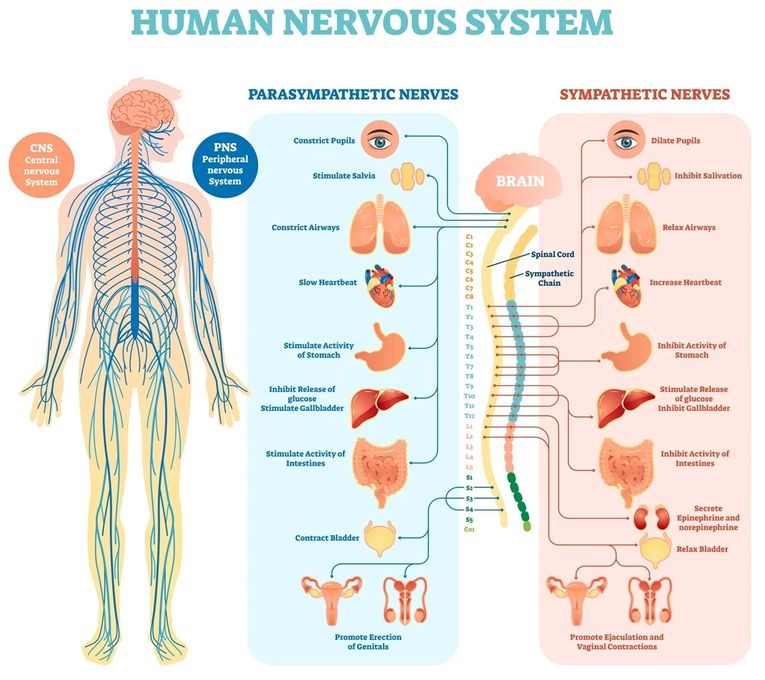
The Autonomic Nervous System: Your Gas and Brake
Rest and digest. Heart rate slows. Breathing deepens. Digestion activates. Growth and repair engage. Muscles relax. The mind becomes calm and receptive.
Fight or flight. Heart rate rises. Breathing becomes shallow. Blood flows to muscles. Stress hormones flood the system. The mind narrows to threat assessment.
Modern stressors activate the sympathetic system constantly but rarely provide physical discharge. Many clients are stuck here — unable to relax because the system perceives ongoing threat.
Marcus presents with insomnia, digestive issues, chronic neck tension, and feeling 'always on.' Classic chronic sympathetic activation: breathing rate of 18 per minute at rest, chest-dominant breathing, visible tension in neck and shoulders. BOLT score of 12 seconds. His nervous system has adapted to constant threat signals after 20 years of high-pressure work. His body has forgotten how to brake.
Cocoon Approach: Extended exhale practices, coherent breathing for daily practice, sleep hygiene, gradual caffeine reduction, BOLT score tracking. Over 12 weeks: breathing rate reduced to 10/minute, BOLT improved to 28 seconds, sleeping through the night for the first time in years.
Practitioner learning: Chronic sympathetic activation is a physiological state requiring physiological intervention. Breath is the most direct route to shifting it.